Get Full Government Meeting Transcripts, Videos, & Alerts Forever!
Get email alerts on the Infrastructure Assessment topic
No spam. Unsubscribe anytime.
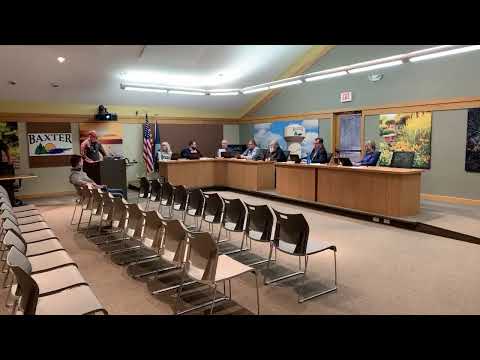
City council places Olivewood–Jewelwood utility feasibility study on consent agenda after cost and roadway-width debate
Summary
The council accepted a feasibility study updating the CIP for Olivewood/Jewelwood utility and roadway improvements, which estimates total project costs of about $7.47 million, requires a sanitary lift station and leaves roughly 80% of costs to the city; members debated narrower street widths and assessment impacts.
A presenter outlined a feasibility study for utility and roadway improvements serving Olivewood, Jewelwood, Jadewood, Allwood and Deerwood drives and said the project is listed in the Capital Improvements Program for 2028. The report estimates total project costs at about $7.47 million, including roughly $3.4 million for sanitary sewer, $1.66 million for water and $2.3 million for roadway work, and proposes assessment formulas based on ERUs set by the council.
The presenter said existing sewer and water stop at the project edges (sewer extended into Allwood in 2007 and into the Hoyer Road area in 2014) and stressed that existing sanitary lines near Wood and Deerwood drives are not deep enough to serve the area. "There will be a lift station that will have to be installed somewhere to the south," the presenter said, noting the location and resulting extra gravity pipe significantly raise the sewer costs.
Using the council's assessment rates rolled forward at 3% annually, the study counts about 90 ERUs in the project area for sewer and water; at $6,253 per ERU that produces roughly $563,000 in assessments for each utility, leaving about $2.8 million (sewer) and $1.08 million (water) as remaining city costs. The roadway analysis counted 91 ERUs at $8,338 each, producing roughly $760,000 in assessments and leaving about $1.5 million for the city. The presenter said there are also 30 existing homes that would pay availability charges totaling about $18,000.
One council member questioned the funding model's sustainability. "I don't see how this is sustainable. I don't know how we're paying for it," the council member said, pointing to the large city share and saying the cost per lot under current land-use patterns is high. Another member urged narrower streets and smaller lots as a solution: reducing lane widths, the member said, would lower construction costs and make infill more financially viable.
Council members and staff also discussed ordinance timing: staff advised waiting to change the city's standard street-width requirement in the feasibility studies until the council takes a global vote on the ordinance. Officials said a presentation on street-width policy tied to upcoming projects (including Clearwater and North Lindale) is planned and that the ordinance change was expected to be considered in May. Finance staff were compiling broader financing scenarios for the city's portfolio of feasibility studies.
Staff asked the council whether to place the report on the consent agenda for acceptance and to seek direction on any modifications before finalizing. A motion to place the feasibility study on the consent agenda was made, seconded and carried; the chair announced the motion carried. Vote counts, movers and seconders were not specified on the record.
The council will revisit the final numbers and any changes to assessment or ordinance policy as the city completes remaining feasibility studies and prepares for the 2028 project schedule.