Get Full Government Meeting Transcripts, Videos, & Alerts Forever!
Get email alerts on the Open Meetings topic
No spam. Unsubscribe anytime.
District attorney briefs trustees on Brown Act basics, social media and remote‑meeting rules
Summary
At a Dec. 18 training, school‑district legal counsel Mark Brae reviewed the Brown Act’s openness standard, enforcement mechanics, serial‑meeting risks, social‑media pitfalls for trustees and the limits of remote‑meeting authorizations such as AB 2449.
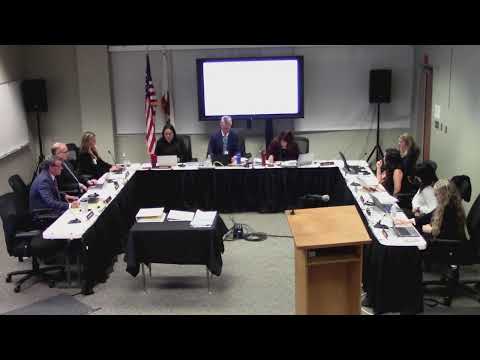
Mark Brae, a school attorney with three decades of experience representing districts, gave the board an extended Brown Act overview during the Dec. 18 meeting.
Brae said the Brown Act is grounded in a simple principle: meetings of a legislative body must be open and noticed so the public retains sovereignty over public agencies. He explained enforcement mechanics — demand‑to‑cure letters precede lawsuits, and courts will often require a showing of prejudice before nullifying an action. "If the public knew about it, it was a technical violation," he said, describing how substantial compliance can defeat a claim.
He walked trustees through what counts as a legislative body and what counts as a meeting, including the risk that a series of communications among a majority can amount to an unlawful serial meeting. Brae emphasized that a "gathering of a majority" to hear, discuss, deliberate or act on district business can trigger Brown Act obligations even if no formal vote is taken.
Brae also addressed modern communication issues. He advised trustees to be cautious on social media: posting informational items is permitted, but likes, comments or shares that express viewpoints on district business can be treated as part of deliberation if seen by a majority. On remote participation, he recommended the traditional teleconferencing model with identified public locations, and cautioned that AB 2449 — which allows more last‑minute remote participation through Jan. 1, 2026 — can create heavy public‑notice and staffing burdens.
Trustees asked a range of follow‑ups about agenda language, closed‑session listings, and whether items listed for closed session must be discussed; Brae answered that posting closed‑session items does not obligate the board to discuss each one. The exchange concluded with instructions on public comment rules and the mechanics of meeting notice and backup material availability.
The training preceded the board’s business items and was followed by questions on practical scenarios such as governance requests and the limits on in‑person staff communications.