Get Full Government Meeting Transcripts, Videos, & Alerts Forever!
Get email alerts on the Nominations topic
No spam. Unsubscribe anytime.
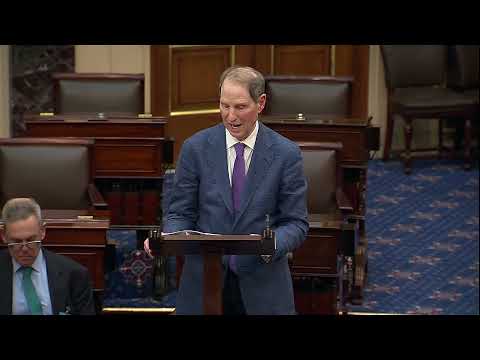
Senator Wyden opposes Joshua Rudd’s nomination for NSA director, cites privacy and transparency gaps
Summary
Senator Wyden delivered a Senate floor speech opposing Joshua Rudd’s nomination as National Security Agency director, saying Rudd refused to commit to judicial warrants, transparency about changes to NSA policies, and to uphold a prior pledge not to buy Americans’ location data.
Senator Wyden rose on the Senate floor to oppose the nomination of Joshua Rudd to be director of the National Security Agency. “I rise to speak in opposition to the nomination of Joshua Rudd to be director of the National Security Agency,” he said, arguing the nominee’s answers at his confirmation hearing were insufficient on constitutional protections, privacy and transparency.
Wyden said the nominee demonstrated what he described as a “lack of familiarity with basic constitutional rights,” and that such understanding is a minimum qualification for the NSA post. He told colleagues he had offered General Rudd a yes-or-no opportunity to say whether he would insist on a judicial warrant before targeting people in the United States for surveillance, and said the nominee did not provide a clear answer.
“That ought to be a bare minimum qualification,” Wyden said, describing multiple occasions where he asked whether Rudd would commit not to secretly violate existing public guardrails on NSA surveillance and saying, in each instance, “He refused.”
Wyden placed that refusal in historical context, citing the 2005 New York Times revelations about an illegal warrantless wiretapping program that he said had been hidden from the public and from Congress. He described the risks that arise when intelligence activity is conducted under authorities outside FISA, and warned that operations carried out under Executive Order 12333 lack review by the FISA court.
The senator also criticized Rudd for declining to endorse a prior NSA commitment not to buy and use Americans’ location data. Wyden argued purchased location data and commercially available datasets can reveal highly sensitive details about Americans’ lives and said the risk grows when such data can be analyzed with artificial intelligence.
On encryption, Wyden said he asked whether the government should mandate backdoors and reported the nominee declined to take a position. “Once you weaken encryption it is inevitable in America that foreign spies and criminals will exploit the vulnerability,” Wyden said, urging that weakening cryptography would make the country less secure.
Wyden highlighted publicly stated policies and procedures that have, in his view, served as guardrails on NSA activity under Executive Order 12333. He said those policies — while not statutory law — are meant to provide the public and Congress with an understanding of limits on surveillance, including a practice that generally requires the Attorney General to find probable cause before searching certain 12333 collections for Americans’ communications.
The senator pressed whether Rudd would inform the American people, and the Senate Select Committee on Intelligence, if the administration secretly withdrew or changed those public policies; Wyden said he did not receive a straightforward commitment. He framed that absence of a pledge as a concrete transparency concern and a reason to doubt the nominee’s willingness to protect constitutional limits on surveillance.
Wyden closed by acknowledging Rudd’s military service but arguing the NSA director must also bring deep experience on U.S. signals activities and cybersecurity. “For these reasons … I oppose this nomination, and I urge my colleagues in the Senate to do the same,” he said.
The speech did not record a response from the nominee on the floor. Wyden urged fellow senators to consider the history of secrecy and the nominee’s answers when evaluating whether to support confirmation.