Get Full Government Meeting Transcripts, Videos, & Alerts Forever!
Get email alerts on the Education topic
No spam. Unsubscribe anytime.
Charter leaders tell Jasper County council funding gap limits growth and facilities
Summary
Leaders of Polaris Tech and Royal Live Oaks told the Jasper County Council that charter schools bring jobs and investment but operate on far less per-pupil funding than traditional districts, and they urged county support and local funding options; a state representative said counties have authority to allocate local funds.
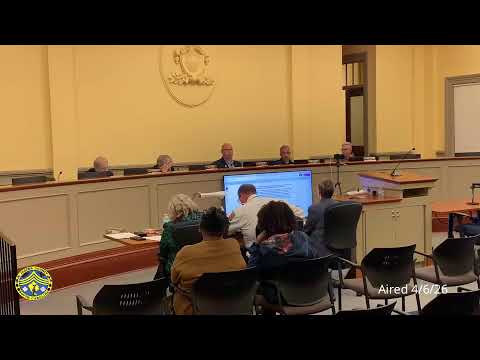
Ken Statatler, executive director of Polaris Tech Charter School, and Dr. Karen Wixs, chief executive of Royal Live Oaks Academy, told the Jasper County Council that their two schools together represent significant local economic activity and face a steep per-pupil funding gap.
"Polaris Tech has 64 employees, $4.2 million in payroll and $18.7 million in capital investment," Statatler said. He and Dr. Wixs said the two schools total more than 150 jobs, roughly $46 million in capital investment and about $10 million annually in operating payroll that flows into the local economy. They said both schools have expanding wait lists and capital needs including a gym and career-and-technology space.
Dr. Wixs said charter funding does not cover the full cost of operating or building facilities. "Traditional schools are funded just under $33,633 per student whereas charter schools in Jasper County are funded at just under $11,000 per student," she said, calling the difference an "inequity" that forces charter operators to borrow or reduce overhead and concentrate spending in the classroom.
Representative Hager, introduced by presenters as part of the delegation who drafted House File 5182, told the council the legislation sought to allow local funding of charter schools but that the governor vetoed it; he said the veto underscored that counties retain home-rule authority and may use their budget authority to support charter schools if they choose.
Council members asked for clearer comparisons of academic outcomes and about whether the schools are for-profit. Statatler and Wixs said performance varies by area and that their schools show local academic gains, but they declined to offer a unilateral statewide ranking, noting comparisons require context. One council member asked directly whether either school operates for profit; presenters responded that models vary by region and emphasized their mission is student-centered.
Why it matters: County officials are budget-makers and may be asked during FY27 budget discussions to consider a local per‑pupil allocation or other support for charter facilities or programming. Presenters framed local funding as an investment in workforce development tied to projected growth in healthcare, logistics and manufacturing employment.
What’s next: Presenters offered to meet with county staff and municipalities to discuss possible formulas and site needs; council members suggested a follow-up workshop during the budget cycle.