Get Full Government Meeting Transcripts, Videos, & Alerts Forever!
Get email alerts on the Traffic Signals topic
No spam. Unsubscribe anytime.
Prescott Valley Public Works explains how traffic signals, detection and pedestrian timing work
Summary
Prescott Valley Public Works staff explained how decisions on left‑turn phasing, vehicle detection and pedestrian crossing times are made, cited FHWA/MUTCD guidance and described upgrades (video detection on Glassford, audible pushbuttons) to improve safety and accessibility.
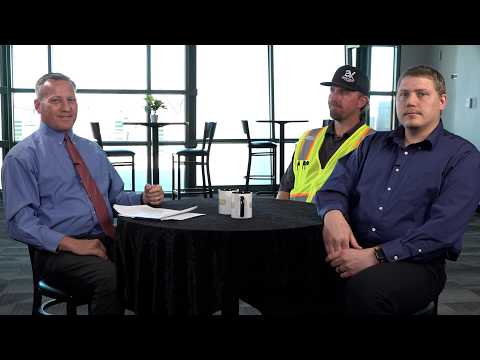
On the town’s PV in Focus podcast, Prescott Valley Public Works staff described how traffic signals are timed, how intersections detect vehicles and how pedestrian crossing times are set and adjusted.
Parker Murphy, the town’s traffic engineer, said pedestrian timing follows federal guidance: “there’s a set 7‑second that it shows the walk and then it gives you the countdown,” and the countdown is based on crossing distance divided by 3.5 feet per second under ADA and PROWAG. That 3.5 ft/s standard is used to compute the countdown timing, and staff said they can increase the crossing time where accessibility or demand requires it.
The explanation matters for drivers and pedestrians because signal decisions change how traffic flows and how long people have to cross streets. Jake Hanley, a member of Prescott Valley Public Works who oversees signals and signs, said left‑turn phasing is driven primarily by left‑turn volume and safety needs. “If there’s a high amount of left turning volume, it’ll go from the yield to the protected permissive,” Hanley said. Dual left‑turn lanes and conditions that create greater exposure are treated as protected only.
Staff said there is no single numeric threshold used across every intersection. Instead they rely on guidance from the Federal Highway Administration and the Manual on Uniform Traffic Control Devices (MUTCD), county and state guidelines, and local observations or complaints. “We also follow a county and and state guidelines on how to implement how to how and when to implement those types of phasing,” Hanley said.
Detection systems vary by location. Hanley described video cameras and in‑pavement loops that register vehicles, and he noted that when detection fails the controller often follows a timed sequence. He used Robert Road as an example of a time‑offset coordinated plan: “Robert Road is on a time offset coordinated plan…so that’s why sometimes you’ll be sitting there and it might be green north‑south if you’re on Lakeshore,” Hanley said, explaining the tradeoffs of pre‑timed vs. dynamic control.
Glassford is being upgraded to video detection as part of the Glassford widening project so signals there can use more dynamic timing and phasing. Parker Murphy said the project will let staff move beyond strictly pre‑timed coordination to better match real‑time traffic demand.
The podcast also addressed pedestrian pushbuttons and audible features. Hanley explained that pushing a button multiple times registers a single call: “It does one call. You press it once, it does one call.” He said the town has upgraded some pushbuttons—at Glassford and Long Look, and at Glassford and Lakeshore—to provide audible feedback so users know their request was received. Murphy added that PROWAG establishes the accessibility standard and that upgrades will continue as signals are modernized.
Staff emphasized that timing changes and detection upgrades are intended to improve safety and accessibility while conforming to established federal and state guidance. They said residents who have concerns about a specific intersection should report it so staff can observe volumes, detection performance and any safety issues that might justify a change.
Town staff said the Glassford upgrades and continued pushbutton and detection improvements are scheduled as part of planned capital work; specific completion dates were not specified.