Get Full Government Meeting Transcripts, Videos, & Alerts Forever!
Get email alerts on the Workforce Opioid Equipment topic
No spam. Unsubscribe anytime.
County approves workforce training agreements; sheriff seeks $1,600 equipment stand; commissioners report $1.257M opioid installment
Summary
Job and Family Services presented three workforce-training agreements totaling roughly $925,462; Sheriff John Alberty requested a $1,600 cart/stand for new drug-evidence processing equipment; commissioners said a second opioid-settlement installment of about $1.257 million is en route. Staff also urged residents to use the state's energy-choice comparison tool.
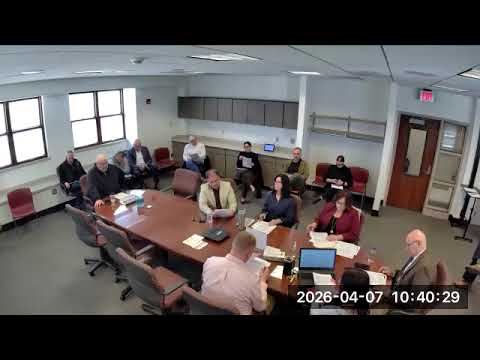
Trumbull County Job and Family Services reported April 7 that it will act as fiscal agent on three workforce agreements to support youth training and related services. John Gargano said the agreements include: Tri-County Jobs for Ohio Graduates for $399,998.73; a second Tri-County Jobs for Ohio Graduates line for $249,967.69; and a Trumbull Metropolitan Housing agreement for $275,496 — all intended to provide tutoring, alternative education, occupational training, mentoring and work-experience for eligible youth ages 16–24, and all using non-general-fund sources.
Separately, Sher Taylor in the commissioner’s office and Sheriff John Alberty described a necessary $1,600 add-on to convert a recently acquired ventilated drug-evidence processing unit into a mobile cart so evidence can be moved into evidence rooms rather than processed in a fixed location. Alberty said the device improves safety for evidence handling and that adding the stand was a straightforward, low-cost add-on compared with larger facility expenses.
Commissioners also reported that a second installment from opioid-settlement litigation — described in the meeting as about $1.257 million — has been initiated and will be received by the county. Commissioners urged better public communication about energy-choice shopping tools and asked staff to ensure residents know how to use the state's energy-choice comparison (energychoice.gov) and local 'apples to apples' resources so calls to the commissioner's office decrease.
Why it matters: The workforce agreements fund training and services for at-risk youth and are fiscally significant within relevant grant programs; the equipment add-on addresses safety and evidence-processing logistics; the opioid-settlement installment will expand county resources available to programmatic responses.
Next steps: JFS will finalize agreements and act as fiscal agent; the sheriff will proceed with the stand purchase if authorized; staff will coordinate posting guidance on energy-choice tools and process the opioid settlement funds through the county’s accounting.