Get Full Government Meeting Transcripts, Videos, & Alerts Forever!
Get email alerts on the Public Transportation topic
No spam. Unsubscribe anytime.
Commissioners seek mayoral buy‑in on countywide transit options as 5310 oversight deadline looms
Summary
Trumbull County commissioners met with mayors and transit stakeholders to explore restoring or reconfiguring public transportation, weighing 5307/5310 funding rules, past pilot data and cost estimates; commissioners agreed to poll municipalities on interest in on‑demand or fixed‑route service and to protect 5310 funds.
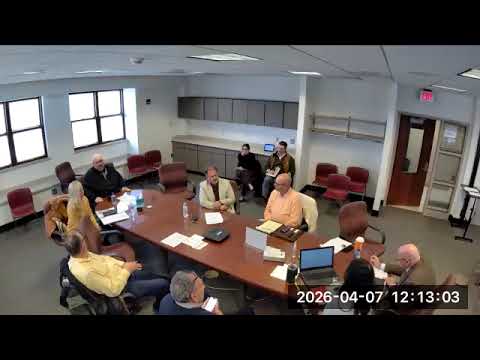
Trumbull County commissioners convened municipal leaders, transit providers and community groups at a special meeting to gauge interest in restoring or redesigning public transportation across the county and to ensure continued oversight of federal 5310 funds, officials said.
The discussion centered on whether municipalities want to pursue 5307 urbanized‑area designation or to expand use of 5310 funds for seniors and people with disabilities, whether to form a regional transit authority (RTA) or contract services, and how to cover required local matches. "A good system here is at least $2 million," said Mike (transit administrator), describing a baseline cost estimate for adding general‑public service beyond existing senior and paratransit programs.
Why it matters: Commissioners and providers warned that 5310 funds require an identified local steward and compliance work to remain available. Participants said the county faces a near‑term deadline to secure oversight arrangements for those funds. Ray Chapman, representing regional planning interests, summarized federal and state matching rules and urged identifying a sustainable local match before applying for pilot grants.
Community providers described service gaps. Megan D. Gregory, director of Thrive 1010, said residents who live between Belmont Avenue and State Route 422 — often younger than 60 and not classified as disabled — "fall between the cracks" of existing programs and have trouble reaching work, medical appointments and social services. Several participants noted fixed routes and on‑demand models both have tradeoffs: fixed routes can be cheaper per ride but require infrastructure and frequency to be useful; on‑demand or microtransit pilots can target pockets of need but require stable backup funding.
Speakers reviewed past efforts. Participants recalled an ODOT‑funded pilot (OTP2) that established several fixed routes and produced ridership and cost reports (the last full year cited was 2018). Those historical reports — held by WRTA and Eastgate — were identified as useful starting points for estimating costs and demand. Several people said the prior transit board experienced reporting and compliance shortfalls that led to significant reconciliations with contractors; county staff emphasized the need for written ADA and Title VI policies and reliable audits going forward.
Funding and compliance: Participants discussed federal rules that generally make capital grants an 80/20 split and operating grants closer to 50/50, and that a designated recipient administers 5307 funds for an urbanized area. Commissioners noted staffing and oversight obligations for any entity that would hold designation. Transit staff said current senior/disabled service operates on a base of roughly $1.3–1.4 million, and that adding general‑public trips would increase costs substantially.
Next steps: Commissioners proposed a practical next step — sending a written yes/no poll to mayors asking whether their municipality would be willing to participate in on‑demand or fixed‑route countywide service and what level of financial commitment they would consider. Staff volunteered to split outreach and to collect baseline ridership/cost reports from WRTA and previous pilot documentation. The meeting produced direction to draft and send the letters rather than a formal recorded vote.
What was not decided: The body did not vote to form an RTA or to select a contractor, nor did it adopt a funding plan. Several speakers urged a careful, data‑driven approach rather than rushing into a costly system, and noted that possible employer contributions or advertising revenue could help local match needs.
The commissioners closed the meeting with instructions to prepare the written poll to mayors and to assemble historical ridership and cost data for use in follow‑up planning.