Get Full Government Meeting Transcripts, Videos, & Alerts Forever!
Get email alerts on the Ethics Complaint topic
No spam. Unsubscribe anytime.
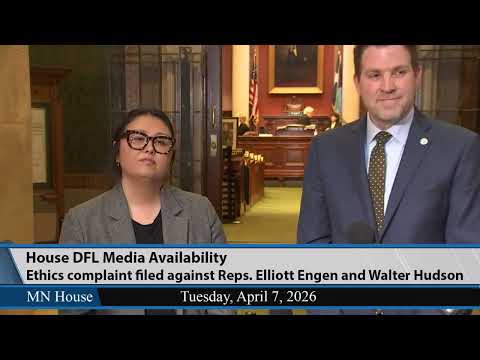
South Minneapolis lawmaker files ethics complaint accusing colleagues of leaving committee to drink
Summary
A lawmaker who represents District 63 and sits on the Education Finance Committee said she filed an ethics complaint against Representative Hudson and another member, alleging they left a committee hearing to drink at a local bar and later returned to the floor; the matter is now with the House Ethics Committee for investigation.
A lawmaker who represents District 63 in south Minneapolis and serves on the Education Finance Committee said she filed an ethics complaint accusing Representative Hudson and another House member of abandoning committee duties, going to a local bar and returning to the floor during votes.
"I represent District 63, which is a part of south Minneapolis. And I'm also a member of the Education Finance Committee," the lawmaker said. "We filed an ethics complaint against Representative Hudson and [another member]." She said the complaint addresses what she called a dereliction of duty for leaving an Education Finance Committee hearing while the panel considered bills on teacher retention and student absenteeism.
The lawmaker said the committee handles funding decisions that affect more than 900,000 students in Minnesota and stressed that members should be present for hearings. "I take that work really seriously," she said, adding that she had not previously filed an ethics complaint in her time at the Legislature and viewed the filing as a serious step.
Reporters asked whether the allegation overlapped with any criminal investigation, including possible driving under the influence. The lawmaker said the ethics process is separate from criminal proceedings and that the complaint focuses on conduct in the chamber and committee: it is about whether members "did not attend the committee," she said, "and that is an appropriate process for the Ethics Committee."
She also criticized what she described as a broader pattern of some members avoiding committee work, saying that temporary removal from committee would not be a sufficient penalty if rules were violated. "We trust the Ethics Committee to move through the process," she said, "and to answer some of the key questions that we have."
Reporters raised a separate concern about whether a member's prior employment as a lobbyist created a conflict when carrying legislation. The lawmaker said the individual had left the lobbyist position and noted that Minnesota’s part-time Legislature often includes members who work in relevant fields outside the Capitol; current disclosure rules require lobbyist registration and disclosure.
The lawmaker also said she and colleagues are considering policy changes related to post-incident testing in cases of suspected intoxication, arguing that an absence of testing can prevent authorities from pursuing criminal charges. She said those potential reforms are under discussion but did not propose specific statutory language.
The complaint has been referred to the House Ethics Committee for review; the committee will decide whether to investigate further and whether any sanctions are appropriate. The lawmaker said she filed the complaint to uphold institutional integrity and to ensure legislators are present for hearings that affect students and schools.
The Ethics Committee had not announced a timeline for any investigation at the time of the statement.