Get Full Government Meeting Transcripts, Videos, & Alerts Forever!
Get email alerts on the Fees And Assessments topic
No spam. Unsubscribe anytime.
Commissioners consider fees, stormwater and a fire assessment to shore up budget
Summary
Longwood staff outlined options beyond property-tax increases — including a possible fire assessment, higher stormwater fees, adjustments to permit fees constrained by state law, and efforts to recover ambulance billing — as ways to reduce pressure on reserves and fund capital needs.
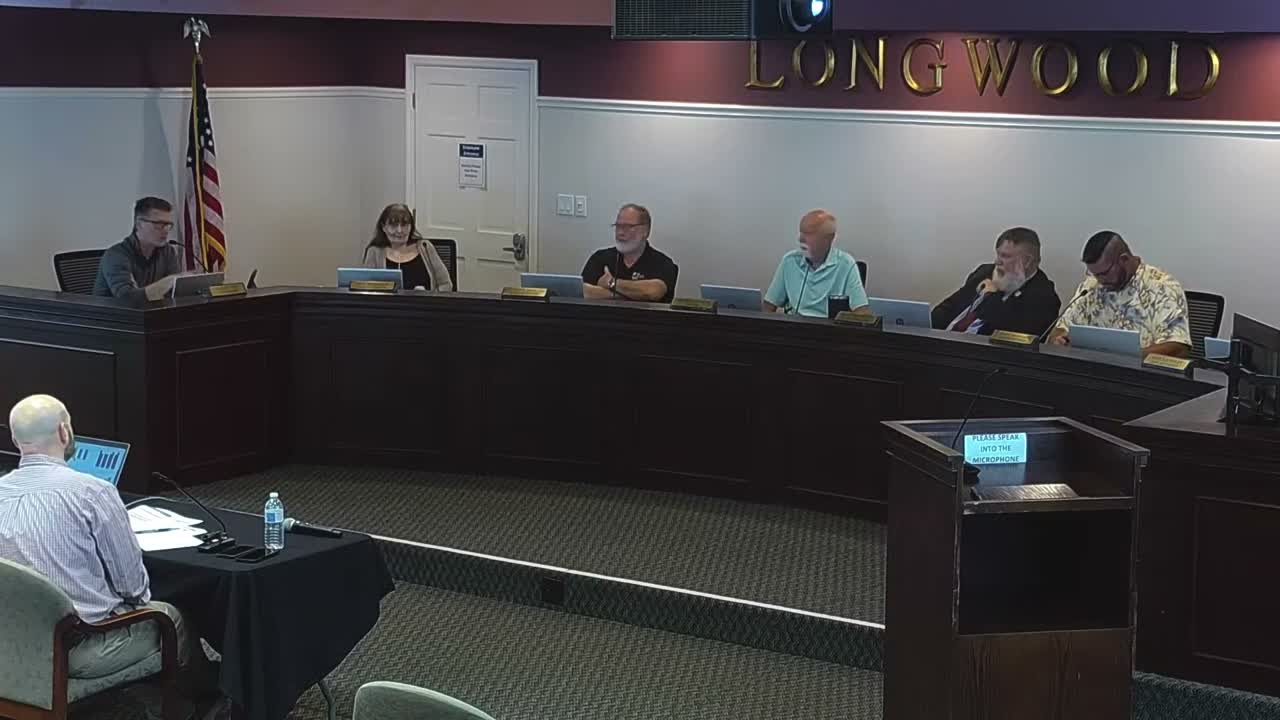
Commissioners at the April 8 budget workshop weighed a variety of non‑tax revenue options to help close the projected budget gap.
The fire chief briefed the commission on fee‑for‑service revenue from ambulance transports and efforts to reduce billing costs. "We transport a lot of people... we're right around pulling in 1000000 dollars," he said, and told the commission his office had reduced third‑party billing fees from 6.1% to 3.8% to retain more revenue. He also said the department is pursuing state reimbursement programs to better cover transport costs.
Public works Director Shadd Smith flagged the stormwater fund as an underpriced revenue stream. "It's currently generally speaking, it's at $6 a unit," Smith said, and noted raising the stormwater fee would produce material revenue that could support staff and capital work.
Planning staff and the building official described a recent state law change that requires fees for building and planning reviews be tied to actual review costs rather than valuation‑based formulas; that rule may limit permit fee revenue but staff said they are evaluating what increases are allowed and are looking for administrative efficiencies and unbilled business taxes.
Staff also discussed a preliminary idea for a targeted fire special assessment to create a capital fund for stations and apparatus; a rough, early estimate in the workshop referenced a $250,000 special assessment fund figure as a preliminary planning number, which staff said would be split among taxpayers and would build over time rather than produce immediate full funding.
Commissioners heard that grants remain an important but inconsistent revenue source; staff proposed more aggressive grant pursuit and noted recent awards that supported drainage work. Any fee or assessment changes will be developed further and returned for formal public hearings during the budget cycle.