Get Full Government Meeting Transcripts, Videos, & Alerts Forever!
Get email alerts on the Ems Funding topic
No spam. Unsubscribe anytime.
Supervisors, advisory members debate 75¢ per‑$1,000 EMS funding referendum and how to split proceeds
Summary
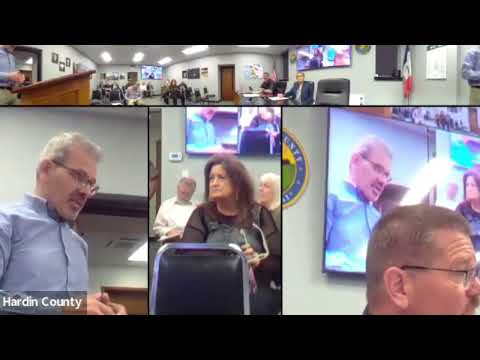
Hardin County supervisors and advisory members reviewed a proposal to fund emergency medical services by up to 75¢ per $1,000 in assessed value, debating whether proceeds should flow to townships or be centrally administered and whether to fix a 70/20/10 allocation for ALS/BLS/first responders.
Hardin County supervisors and advisory members spent the bulk of the meeting in a workshop discussing whether to place a referendum before voters to raise up to 75¢ per $1,000 in assessed value to support ambulance and first‑responder services.
The proposal would create a dedicated funding stream intended to shore up services across the county, but participants disagreed about how the money should be collected and distributed. County staff and advisory members described a potential allocation split — 70% to advanced life support (ALS), 20% to basic life support (BLS) and 10% to first‑responder units — and debated whether that split should be fixed in ballot language or set as a temporary default.
Why it matters: local ambulance services carry rising costs for equipment and transport while reimbursements from Medicare and private insurers have fallen, participants said. Without a new revenue source, several speakers warned that smaller services could be forced to curtail coverage or rely on distant agencies for transport.
Workshop discussion and key exchanges
Agency representatives and emergency responders outlined the problem in practical terms. An agency official said, “Ambulances have gone to about $350,000 for ambulances and even gloves,” highlighting equipment and insurance costs that strain small providers. That presenter and other advisory members described a tiered EMS model in which first responders provide immediate lifesaving care, BLS teams provide broader on‑scene support, and ALS teams bring paramedic medicine and advanced interventions.
Several supervisors urged routing funds back to townships so local trustees can negotiate service contracts that reflect their community preferences and needs. One supervisor said routing money to townships would allow local officials to “negotiate with Iowa Falls and Ackley” or choose to contract with a different provider, preserving local flexibility.
Others warned that locking a fixed percentage split or a long multi‑year term into the referendum could discourage voters. The chair observed that the proposed 15‑year horizon and fixed allocations could remove future negotiating room and suggested ballot language that preserves short‑term assurances for providers while returning discretion to townships after an initial period.
Administrative questions and impacts
County staff explained technical hurdles for collection and distribution: the county’s tax collection system would require custom programming to split revenues accurately by township and by service recipient, and staff said they had not yet estimated the programming cost or ongoing administrative workload. The treasurer and staff discussed monthly versus quarterly disbursement schedules and whether townships without bookkeeping capacity would face an administrative burden.
Participants also flagged larger financial dynamics: Medicare and insurer payment changes mean services often cannot recover the full cost of transport, leaving cities and counties to cover persistent shortfalls. Speakers said longer travel distances in rural areas increase unreimbursed costs because payers typically pay only for loaded miles or limited portions of an ambulance run.
Outcome and next steps
There was no formal vote on a referendum at the meeting. Staff agreed to draft a written recommendation that lays out a baseline option, records the questions and concerns raised (especially about ballot language and disbursement mechanics), and circulates the draft to supervisors and the advisory council for further revision. Officials also said they will continue outreach with townships, cities and service providers to refine the proposal before placing a measure on a ballot.
The board concluded the workshop by asking staff to return with draft ballot language and more detailed cost and technical estimates so supervisors can evaluate tradeoffs before any formal action.