Get Full Government Meeting Transcripts, Videos, & Alerts Forever!
Get email alerts on the Infrastructure And Environment topic
No spam. Unsubscribe anytime.
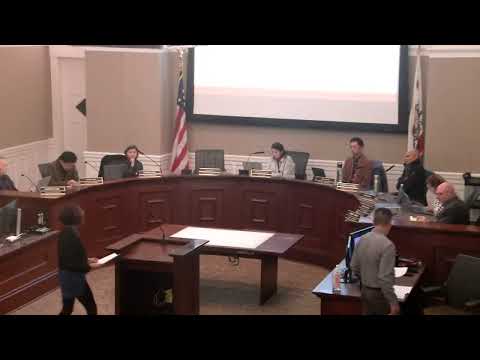
Planning Board backs removal of 65 trees for Tilden/Clement roundabout, staff will plant 101 replacements
Summary
The board recommended City Council approve removal of 65 trees for the Tilden/Clement roundabout project and supported a mitigation plan to plant 101 replacement 24‑inch‑box trees; members pressed staff on species selection, irrigation and EIR coverage before voting.
The Alameda Planning Board recommended that the City Council approve removal of 65 trees to make way for the Tilden/Clement roundabout and associated roadway improvements, while endorsing a replacement plan that calls for planting 101 24‑inch‑box trees and replanting coast live oaks where feasible.
City Engineer Scott Wickstrom introduced the item, explaining staff had missed a procedural step and was seeking the board’s recommendation before council action scheduled for Dec. 16. Public Works project manager Ali Hateffi described the project scope: construct a roundabout at the Tilden/Clement intersection, implement a road diet on Tilden Way (one travel lane each direction), extend Clement Avenue, complete connections to the Alameda/Trail and San Francisco Bay Trail, remove railroad equipment and remediate contaminated soils on the former rail parcel, and install bicycle and pedestrian improvements and a dog park.
Hateffi said the CIP identifies the removal of 65 trees of various species and sizes (1–38 inches in diameter) to accommodate the improvements and right‑of‑way changes; staff’s planting plan proposes 101 replacement trees in 24‑inch boxes, irrigation and a one‑year establishment maintenance period. Four coast live oaks were identified for removal; three of those received Historical Advisory Board approvals and staff said one had been approved earlier at staff level as a risk tree. The project also identifies several trees suitable for on‑site relocation.
Board members asked technical questions about how the planting list was developed, whether the supplemental exhibit clarified planting locations, which species were selected and whether the Street Tree Master Plan guided species choice; staff said the landscape architect prepared the planting plan, internal staff (including the city arborist) reviewed it for compliance, and that the plan meets the municipal requirement for a 2:1 replacement ratio. Members also asked about irrigation (staff: combination of bubblers and drip systems), bio‑retention areas to treat runoff, and whether the prior EIR covered tree removals and required nesting‑bird or protected‑species pre‑removal surveys. Staff said the EIR addressed impacts generally and the Historical Advisory Board reviewed coast live oak removals; staff agreed to follow up on survey/mitigation questions as needed.
After discussion, a commissioner moved and the board voted to recommend council approval of the tree‑removal and replacement plan; the chair announced the motion passed with voices in favor and one member absent.
What happens next: The Planning Board’s recommendation will go to the City Council on Dec. 16 for a final decision on tree removals and associated construction approvals. Staff said construction is underway on the CIP and tree signage and public notices were posted as required.
Speakers quoted in this article are drawn from the meeting transcript and staff presentations.