Get Full Government Meeting Transcripts, Videos, & Alerts Forever!
Get email alerts on the Transportation Management topic
No spam. Unsubscribe anytime.
Evanston advisory council reviews draft stadium transportation plan, sets June 2 recommendation target
Summary
Consultant Peter Lemon presented a draft transportation‑management plan that tallies about 1,391 on‑site spaces and proposes shuttles, ride‑share zones, and strengthened signage; council members pressed for clearer communications with Northwestern, neighborhood protections (sawhorses, police coordination) and post‑event evaluation metrics.
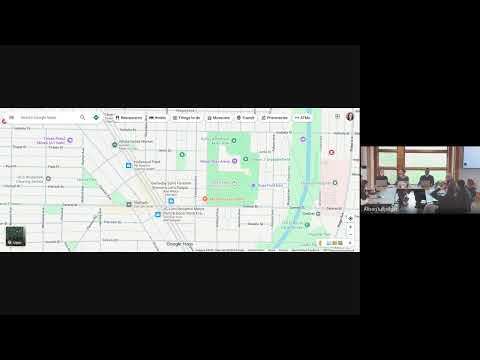
Peter Lemon, a consultant with Kimley‑Horn, laid out a draft transportation‑management plan for the new stadium at a Ryan Field advisory council meeting in Evanston on Tuesday, saying the plan assumes roughly 1,391 on‑site parking spaces and a mix of nearby garage, surface and shuttle‑served lots.
The plan’s inventory, Lemon said, includes about 900 spaces in the west lot, roughly 309 in the east lot and about 182 in a north lot created in the outfield area. He also cited agreements and nearby public supply: “there’s an agreement [with the hospital] for 700 spaces,” and “about 2,800 spaces downtown” that could be used with shuttle service, Lemon said.
Council members and neighborhood residents focused the discussion on how fewer street parking options—resulting from recently implemented residential permit restrictions—would change the demand for managed lots, and on how to prevent event traffic from spilling into nearby blocks. “We’re not assuming anyone’s parking in a neighborhood at this point,” Lemon said, while residents urged concrete neighborhood protections such as sawhorses or staffed access points so residents can reach their homes without lengthy confrontations with officers.
Why it matters: The advisory council’s review will shape operational details managers use this summer and fall, including where shuttles and ride‑share pickup zones are staged, how vehicle egress is routed after events, and how the city and Northwestern coordinate communications and enforcement. Council members set a target of making a recommendation on the plan by June 2; several members said earlier notification from Northwestern about event dates is essential so the city can staff parking enforcement and public‑safety personnel.
Key details and disagreements
• Parking totals and off‑site options: Lemon presented the on‑site totals (1,391) and said the hospital garage and downtown garages are the largest off‑site assets under consideration. Residents and councilors asked the consultant to produce a single inventory showing status for each candidate site (e.g., Canal Shores, Kingsley, Haven, Old Orchard, Niles North) and the negotiation stage for each.
• Neighborhood access and physical controls: Neighbors told the group they have been barred from streets or confronted by officers during prior events. One resident described being stopped at an intersection and told the street was closed despite carrying identification. Council members said that, to avoid that outcome, the plan must specify staffed access points, signage and training for officers so residents can get clear directions (“If you tell me the best way to get to your house is to go to Livingston, I will take Livingston,” a resident said).
• Signage, QR codes and communications: The council repeatedly urged a joint communications approach. Members recommended that both Northwestern and the city maintain a single, easy‑to‑find “know before you go” page linked from signs’ QR codes and that Northwestern commit to a predictable cadence for posting scheduled events so the city can plan staffing. Lemon suggested variable message signs and prepaid parking passes as ways to route arriving drivers away from sensitive streets.
• Shuttles and ride‑share: The draft envisions dedicated shuttle routes to campus and downtown parking as well as two ride‑share pickup zones—one west, near the Metro, and one east near Lakey Park or the medical office building—to separate pedestrian and vehicle flows. For large events, the consultant said previous operations used dozens of buses and that staging and backfill locations would be needed so buses do not idle in front of homes.
• School days and weekday events: Several members insisted the plan include explicit variations for weekday events when schools are in session; they flagged parent pickup times and school traffic as constraints that should alter shuttle and staging strategies.
• Idling, sustainability and equipment: A member asked that Evanston’s idling ordinance be reflected in staging and that the plan keep the aspiration of electric shuttles noted, while recognizing that sourcing large numbers of electric buses may be impractical in the near term.
• Performance metrics and review: The council requested a framework for monitoring the plan’s success—examples included time to clear Central Street after events, counts of parking enforcement actions, and 311 calls—and an evaluation cadence (an initial debrief after the first events and seasonal retrospectives to adjust operations).
What’s next
The consultant said he will compile a written draft that includes maps of pregame and postgame routes, shuttle and ride‑share layouts, sign locations and a contact list for the operator and city leads. The council agreed to meet again to review safety and sustainability materials and to aim for a recommendation on the transportation plan by June 2; members emphasized the plan is a living document that will be revised after initial events and data collection.
Speakers quoted in this article are drawn from the advisory meeting transcript and include Peter Lemon (Kimley‑Horn), Mayor Mary Rosinski, Council Member Davis and neighborhood participants. The council does not make final approvals; it provides an advisory recommendation to city staff and the city manager.