Get Full Government Meeting Transcripts, Videos, & Alerts Forever!
Get email alerts on the Transportation topic
No spam. Unsubscribe anytime.
Caltrans outlines $247 million Tehachapi truck-route rehabilitation, funding contingent on future allocations
Summary
Caltrans presented plans for a 44.8-mile rehabilitation of the Tehachapi truck route including a new climbing lane, widened shoulders, wildlife undercrossings and safety barrier upgrades. Construction is estimated at $247 million and contingent on future competitive G13 funding; Caltrans aims to be contract-ready by mid‑June 2026 and anticipates possible construction start in 2028.
Caltrans officials on Monday laid out plans to rehabilitate roughly 44.8 miles of the truck route near Tehachapi, proposing climbing lanes, widened shoulders, upgraded bridge rails, wildlife undercrossings and new concrete barriers as part of a safety-focused reconstruction that Caltrans estimates could cost about $247 million.
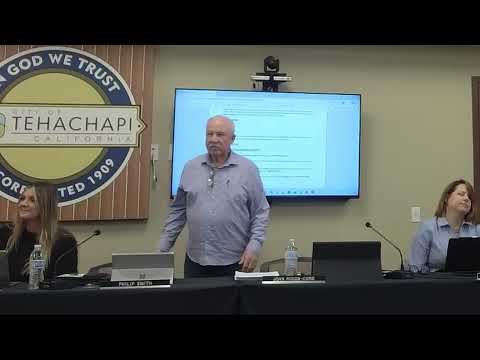
Brian West, identified in the meeting as the Caltrans District 9 deputy responsible for engineering, told the Tehachapi City Council the project is in the late development phase and Caltrans expects to be "contract ready" — that is, ready to advertise the construction contract — by June 15, 2026. "We hope to be contract ready, ready to list, ready to advertise construction contract by June 15th of this year," West said.
The work would be split into three segments to reduce travel disruption, starting with the uppermost segment (about 3.7 miles) to allow contractors to establish methods before moving to more challenging terrain. Caltrans plans to add a three‑mile-plus uphill climbing lane in some areas, widen non‑paved shoulders, install two wildlife undercrossings, replace about 8,300 feet of metal-beam guardrail with new concrete barrier and construct roughly 21 retaining walls.
West described the project as a G13 candidate — a contingency project that receives funding only when leftover dollars are available after higher-priority program and emergency reserves are funded. "This project is about $247 million in construction paid for by the SHOPP," West said, and added that Caltrans would request funding when opportunities arise; he named August 2026 as a possible window to seek CTC (California Transportation Commission) funding if the commission’s allocations allow.
Caltrans staff said the plans are approximately 99% complete and estimated a multi‑year construction timeline with an overall construction duration of about three years once fully funded. They also noted contractual incentives and liquidated damages to encourage timely completion: Caltrans expects the contract to set a working‑day limit in the range of roughly 700–800 working days, with daily liquidated damages applied for overruns.
Council members and several residents expressed support for the upgrades, citing frequent commutes on the grade and a series of serious accidents in recent years. A council member asked whether Caltrans would wait to secure the entire funding package before beginning work; West said the agency prefers to fund the full project at once but could be required by the CTC to phase the project if funding becomes available only in smaller increments.
Caltrans emphasized public outreach and traffic mitigation during construction: the agency plans staged videos to preview major traffic shifts, signage on adjacent freeways, coordination with trucking companies and restrictions on oversized permits during construction. West also noted plans for on‑site tow and recovery services, daily inspector presence and outreach to major freight generators to encourage use of alternate routes during closures.
What happens next: Caltrans will pursue the necessary regulatory clearances and continue finalizing permit requirements with the regional water board and wildlife agencies. Funding remains the key unknown; construction timing is contingent on the California Transportation Commission’s allocation decisions and may not begin before 2028 if full funding is not secured earlier.