Get Full Government Meeting Transcripts, Videos, & Alerts Forever!
Get email alerts on the Municipal Budget topic
No spam. Unsubscribe anytime.
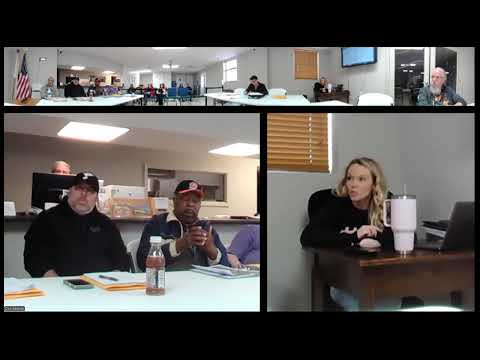
Lebanon City hearing outlines $478,000 shortfall and proposed staff cuts; early-retirement option discussed
Summary
At a public hearing, city staff described a roughly $478,000 budget shortfall and proposed eliminating a building inspector and four lowest-seniority public-works positions; councilors asked staff to study an early-retirement incentive and to provide clearer account balances and repayment plans.
Lebanon City — City staff told residents at a public hearing that the preliminary fiscal 2026–2027 budget shows constrained revenues and a roughly $478,000 shortfall, prompting proposals to eliminate several positions and consideration of an early-retirement incentive to avoid layoffs.
The council chair opened the hearing and said staff would present background before soliciting public suggestions on closing the gap. "We’re going to have to eliminate the building inspector code enforcer position," the chair said, describing it as a full-time post with insufficient work to justify the current staffing level.
Jess, a city staff member who presented the budget, said the city expects just over $2.5 million in general-fund revenue and that most operating costs for police, administration, ambulance coverage, streets and the cemetery come from that account. "With everything we have budgeted, you can see here that we have an estimated remaining of $66," Jess said, adding there is only limited flexibility in line items.
Jess outlined several constrained revenue streams and how they may be used: the business-district tax (estimated $328,000) is restricted to district improvements; a $100,000 downtown-project allocation and $50,000 in façade grants remain in place; about $100,000 is budgeted for incentives to attract new businesses; and hotel/short-term-rental taxes are earmarked for a city website and tourism advertising rather than general expenses.
On enterprise funds, Jess said the water fund and sewer fund each show revenues just over $1 million, with some planned projects paid from prior-year carryovers. For the motor-fuel-funded infrastructure work, the council has scaled a previously larger multi-year project and budgeted $150,000 for a smaller scope.
Staff also warned that two restricted accounts — the utility-tax account and the non-home-rule fund — have been used in prior years to cover other needs. "We are short of $478,000 roughly," Jess said, describing options under review that include internal financing or a line of credit rather than taking a bank loan at a higher interest rate.
Public commenters pressed staff for explanations about past borrowing and the cash position. One resident said the meeting "will be rubber stamped like it has for the last 30 years," voicing skepticism that public input would change outcomes. Another asked whether payroll had been covered by transfers between accounts; staff replied that the utility-tax and non-home-rule accounts had been borrowed against and that current public budget documents follow the state-required one-year format, which does not show multi-year carryover repayments on the face of the document.
The budget discussion turned to personnel options to reduce payroll costs. Council member Kent proposed exploring an early-retirement incentive (ERI) as an alternative to layoffs; staff cautioned that implementing an ERI would require a formal resolution and administrative lead time. "According to the information we received, it’s a minimum of six months before we would even be able to offer it," Penny, a staff member, said, adding ERI eligibility and costs must be studied because an incentive may not apply to all employees.
Council members and residents also raised questions about shifting code-enforcement duties to the police department if the code-enforcement position is cut. Residents asked the city to publish regular police or enforcement activity reports, including fines and code-enforcement actions, so the public can track whether functions are being maintained or merely rearranged.
Several speakers urged clearer financial reporting. Jess said she would begin sharing monthly treasurer reports and budget analyses with aldermen and move toward showing account balances carried forward from prior years, rather than presenting only forward-year figures.
Next steps: staff said they will continue to refine the budget and explore repayment and financing options; the council’s committee will meet later (as noticed) and the council will consider formal actions, including whether to pursue an ERI, in upcoming sessions. No motions or votes were recorded during the hearing.
The hearing provided residents an opportunity to press for transparency and alternatives to layoffs while staff and councilors weighed contract, carryover and financing options to address the identified deficit.