Get Full Government Meeting Transcripts, Videos, & Alerts Forever!
Get email alerts on the Body Camera Release Policy topic
No spam. Unsubscribe anytime.
Boston councilors press for clearer timelines after hearing on police body-camera release
Summary
Councilors at a Boston City Council committee hearing urged the Boston Police Department and other agencies to adopt a public timeline and clearer rules for releasing body-worn and dashboard camera footage; BPD legal counsel said release is governed by Rule 405 and state public-records and criminal discovery laws while OPAC and outside experts recommended independent oversight models like Chicago's COPA.
Boston City Councilors pressed Boston Police Department officials on April 7, 2026 to adopt clear, public timelines and a stronger independent role for oversight bodies when deciding whether to release body-worn and dashboard camera footage, saying current practice relies too heavily on internal discretion and fuels public distrust.
The Committee on Public Safety and Criminal Justice convened the hearing on docket 0638 to examine BPD's protocols for releasing footage. Chair Henry Santana opened the session and framed the review as a matter of "transparency, accountability and public trust." Lead sponsor Councilor Culpeper said the city has invested in body cameras "to strengthen accountability" but lacks a public-facing framework that explains how release decisions are made.
Dave Frederick, general counsel to the Boston Police Department, said BPD follows Rule 405 and the Massachusetts public-records law in responding to requests. "We had approximately 800 requests for body camera in 2025. We released almost 500 of those," he told the committee, and he stressed that multiple legal exemptions and criminal discovery rules can lawfully delay or block disclosure. Frederick cited Massachusetts General Laws chapter 38, section 4 in explaining the DA's role in directing death investigations and said a Suffolk County District Attorney statement that a matter was going to grand jury can make release inappropriate while that process is pending.
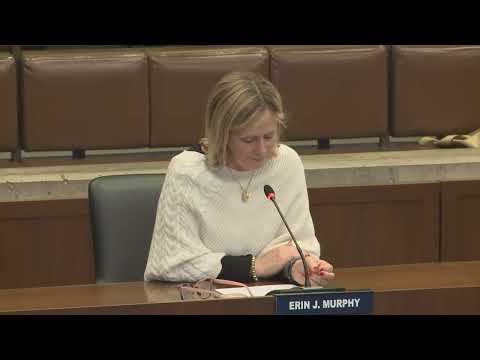
Councilors repeatedly pressed Frederick on who has final authority to release footage and whether the city should adopt a single written standard. Councilor Murphy noted occasions when he had requested footage and did not receive it and asked directly: "Who is in charge of making that call and what are the consistent standards being used?" Several councilors urged a single policy that applies to the police, the DA's office and oversight bodies.
Evandro Carvalho, executive director of the Office of Police Accountability and Transparency (OPAC), told the committee OPAC believes "the public has a right to see the body-worn camera footage" but acknowledged limits when a criminal prosecution or grand jury is active. Carvalho said OPAC routinely seeks access and has made requests but has been denied in at least one recent officer-involved death case because of prosecutorial control of the criminal investigation. He said OPAC intends to perform independent, public-facing reviews when criminal proceedings conclude and urged clearer statutory or regulatory guardrails so oversight can act promptly in future cases.
Dr. Christopher Schneider, a sociology professor who researches body-worn cameras, told the council that academic evidence on whether cameras reduce use of force or civilian complaints is mixed. Schneider recommended adopting a neutral third-party oversight model similar to Chicago's Civilian Office for Police Accountability (COPA), which has direct access to footage and a defined release timeline (COPA policy aims to release footage no more than 60 days after an incident unless a government entity files a written delay request). "Body-worn camera programs are only as good as their policies," he said, arguing that clear definitions of "transparency" and "accountability" and enforceable timelines are necessary to build public trust.
Throughout the hearing, councilors and witnesses discussed several legal and operational issues that determine whether footage is released: the Massachusetts public-records law (multiple exemptions were cited, including investigative exemptions commonly referenced as exemption F), criminal discovery rules and court orders, Rule 405 (BPD's internal body-worn-camera policy), and the practical process by which footage is placed into a criminal case and "locked down" by the video-evidence unit. Frederick described a small set of investigators and supervisors who have early access to footage in active cases and said footage tied to an ongoing case is retained rather than routinely deleted.
No formal votes or motions were taken at the hearing. Councilors asked BPD and OPAC to return with written proposals that would clarify timelines and oversight roles; multiple members said they would seek policy changes that could enshrine a public release schedule into Rule 405 or into city oversight regulations. The committee adjourned without a decision and no public testimony was taken at the hearing.
What happens next: Councilors indicated they plan follow-ups with BPD, OPAC and the Suffolk County District Attorney's office to explore whether the city should amend BPD Rule 405 or the OPAC ordinance to create clearer timelines and to consider vesting an independent oversight body with direct access to footage for release decisions. The hearing record closed with the committee awaiting additional written responses and potential regulatory drafting.