Get Full Government Meeting Transcripts, Videos, & Alerts Forever!
Get email alerts on the Land Use topic
No spam. Unsubscribe anytime.
San Mateo Council weighs one-sign pilot for electronic billboards after residents urge removal of Amphlett billboard
Summary
City staff presented legal paths and revenue examples from neighboring cities as Council weighed whether to allow electronic billboards on city-controlled land. Residents urged removal of an existing Amphlett Avenue billboard; several councilmembers signaled support for a pilot limited to one digital sign and strong siting and operational standards.
San Mateo City Council members heard a staff briefing and public comment April 6 on whether to allow electronic billboards on city-controlled property, with several councilmembers signaling support for a pilot limited to a single sign and residents urging removal of a long-standing billboard on Amphlett Avenue.
Economic Development Manager Jennifer Chan told the Council the presentation was intended to inform a policy direction rather than seek action that night. She outlined three broad options: amend the municipal code to allow billboards on city-owned or city-controlled land with land-use permits and leases; allow billboards by lease and code standards without a land-use permit; or retain the current prohibition. Chan said prior councils raised revenue potential as well as concerns about visual impacts and proximity to residential areas.
Why it matters: staff said electronic billboards could generate consistent non-tax revenue for the city while also offering public messaging or branding protections negotiated in lease agreements. Chan summarized how neighboring cities structure programs and cited approximate revenue examples used in staff comparisons, noting potential trade-offs between revenue and neighborhood impacts.
Staff examples and regulatory constraints Staff presented examples from nearby jurisdictions: San Carlos operates four Highway 101 sites staff estimated at roughly $200,000 per site annually (staff-cited total of about $26 million over 20 years); Belmont has a single site staff cited at about $150,000 per year (staff-cited total ~$7.2 million over 30 years); Millbrae two sites at about $200,000 per site and roughly $10 million over 20 years; Redwood City approved a pilot with preliminary terms including $200,000 annually plus a $100,000 initial payment; and South San Francisco uses a relocation model requiring removal of older billboard faces at a two-for-one ratio. Chan cautioned these were staff-provided, approximate figures and that actual revenue would depend on the number and terms of authorized structures.
Chan also summarized regulatory requirements mentioned in the briefing: Caltrans standards for visibility and lighting, California Environmental Quality Act (CEQA) review in many cases, and possible Federal Aviation Administration review for height or siting. She noted the state Outdoor Advertising Act provides a relocation-agreement pathway that allows cities to permit billboards in some circumstances even where local code otherwise prohibits them.
Public comment Three residents spoke during public comment. Lori Watanuki, who identified herself as a Central neighborhood resident, urged the Council "Please do not place an electronic billboard at this South Amphlett location," saying the existing sign has harmed neighborhood quality of life for decades and urging the city to remove it under the California Outdoor Advertising Act. David Light, also from the Central neighborhood, said he supported removing the old billboard and finding a replacement location on city-owned or leased property, noting staff had identified about 12 city-owned or leased parcels to explore. Kevin Simpson said he opposed any more billboards in the city but conceded that removing the existing blighted sign in exchange for a single, carefully sited electronic billboard might be acceptable: "There's not one person living in this city that wants to see another billboard of any kind anywhere in our city," he said, adding that any replacement must not be visible from homes.
Council questions and direction Councilmembers asked sequencing and implementation questions, including whether removal of an existing billboard is legally required to permit a digital sign and how advertisers and operators typically manage ad rotations. The city attorney clarified that a relocation agreement is one mechanism under state law but is not the only path; a city could pursue other approaches to allow electronic signs. Several councilmembers—Newsom, Diaz Nash, Sifuentes and Deputy Mayor Fernandez (participating remotely)—expressed support for a pilot limited to one digital billboard, removing the old Amphlett Avenue billboard where feasible, and using strict design, maintenance, illumination and lease standards to protect residential areas. Multiple members said they would be comfortable delegating land-use approval to a zoning administrator rather than taking every permit to Planning Commission.
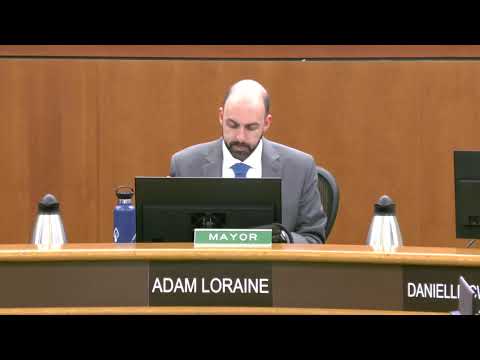
What comes next No formal vote was taken. Mayor Lorraine said the Council "has the direction we need" and adjourned the special session; staff will return with options and next steps for council consideration, including potential locations, draft municipal-code language or lease templates, and proposed standards and mitigation measures.
Quotes (selected) "Tonight is a policy discussion. We're here to present information and get your direction," Economic Development Manager Jennifer Chan said as she opened the briefing. "Please do not place an electronic billboard at this South Amphlett location," resident Lori Watanuki told the Council during public comment. "There's not one person living in this city that wants to see another billboard of any kind anywhere in our city," Kevin Simpson said, while adding he might support a single replacement if it removes an existing blight.
Ending Councilmembers indicated agreement on pursuing a cautious next step—a limited pilot and strong standards—while staff prepares specific options for future Council consideration. No ordinance changes or lease approvals were adopted at the meeting.