Get Full Government Meeting Transcripts, Videos, & Alerts Forever!
Get email alerts on the Education Curriculum topic
No spam. Unsubscribe anytime.
District staff details 'culturally responsive' curriculum and agrees to review concerns about Benchmark materials
Summary
District curriculum staff presented the district's approach to culturally responsive teaching and reviewed adopted ELA, math and science instructional materials; public commenters and trustees asked staff to examine claims that the Benchmark Advance program underrepresents Latino characters and girls and to return follow‑up data.
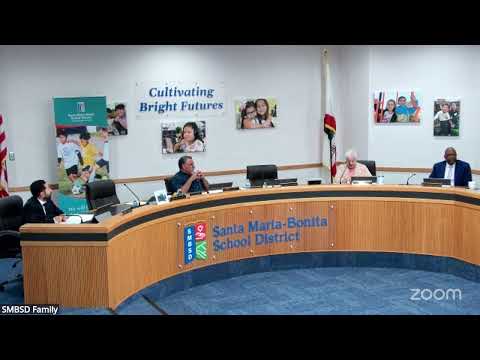
District staff on Oct. 8 outlined how the Santa Maria Bonita School District is implementing culturally responsive teaching across core subjects and supplemental materials and agreed to further investigate concerns raised by teachers and parents about representation in one adopted ELA program.
Dr. Salceto, the district curriculum presenter, told the board that the district's adopted ELA programs for TK–5 include Benchmark Advance (and Benchmark Adelante for dual‑language instruction) and that grades 6–8 use StudySync. She said the district's K–5 math adoption is i‑Ready and middle‑school math uses MidSchool Math; early‑literacy supports include Heggerty and UFLY. Salceto said those programs include culturally connected lessons — for example, a unit on César Chávez in elementary ELA and problem‑based, story‑driven math units for older students — and stressed that culturally responsive teaching is more than materials, describing it as classroom practice that builds relationships, scaffolds learning and fosters student voice.
In the library collections, Salceto said district audits show about 35% of titles are classified as “diverse,” and that librarians are actively weeding outdated or stereotypical materials and ordering new titles to fill gaps.
The presentation prompted questions and public comment. Ivon Duran, a Robert Bruce teacher speaking during public comment, said she "counted characters and authors, their genders and ethnicities" in Benchmark and found the ratio of white to Latino characters at roughly 20:1 and a 3:1 male‑to‑female character ratio, and asked what definition, assessment tool and committee were used to declare the curriculum culturally responsive. Duran said teachers and classroom libraries she knows do not see themselves reflected in the adopted materials.
During board discussion, trustees asked staff whether independent reviews exist. Salceto said she found no external, authoritative audit that produces a single numeric standard for diversity; she told the board the district followed state adoption and piloting processes when Benchmark was selected and pledged to compile local follow‑up data. "I'll have to look," she said about producing a local count and promised staff would try to provide the requested analyses and to report back.
Trustees also pressed for details about teacher piloting and feedback; Salceto described a yearlong adoption cycle that includes teacher pilots, district‑wide teacher input and parent/community opportunities during state adoption cycles. She and other staff said the district will continue to expand supplemental library purchases and to replace outdated titles.
What happens next: trustees asked staff to return with follow‑up information on the Benchmark concerns, additional detail about the 35% library diversity metric and evidence of teacher piloting and feedback. No policy change or vote on curriculum was taken at the meeting.