Get Full Government Meeting Transcripts, Videos, & Alerts Forever!
Get email alerts on the Education Finance topic
No spam. Unsubscribe anytime.
Lancaster School District reports $456.7 million available funds for 2024–25; officials say one‑time federal dollars largely spent
Summary
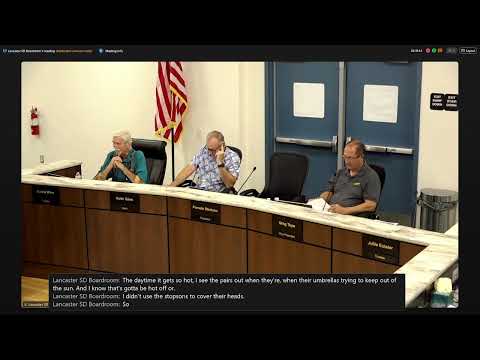
Maria Isabelle, the district's executive director of fiscal services, presented the 2024–25 unaudited actuals showing $292.82 million in revenues, $456.72 million in total available funds and a $138.41 million ending fund balance — down $25.48 million from the prior year due mainly to liquidation of one‑time federal funds and ELOP timing.
Maria Isabelle, executive director of fiscal services, told the board the Lancaster School District received $292.82 million in revenues for fiscal 2024–25 and reported $456.72 million in combined available funds, with an ending fund balance of $138.41 million as of June 30, 2025.
"Our unrestricted expenditures were $198.68 million and our restricted expenditures were $115.52 million," Maria Isabelle said while walking trustees through categories and per‑student spending. She explained that earlier one‑time federal funding used during pandemic years has been largely liquidated and that ongoing state programs such as ELOP now represent a larger share of revenues.
Isabelle highlighted the district's per‑student spending patterns since 2021: higher one‑time federal spending during remote learning, followed by a normalization of federal categorical funds and growth in state and local revenue streams. She said the district receives $24 million annually from the Expanded Learning Opportunities Program (ELOP), which affects carryover and liquidation timing.
At the board's request, Isabelle clarified a transportation payment question: some field‑trip and other transportation invoices were withheld earlier because ABSTA had outstanding balances; the district subsequently paid approximately $5 million after receiving authorization, and the district reported receiving about $3.8 million back from JBSD, she said.
Isabelle broke down major components of restricted balances, listing community grants, mental‑health‑related services, arts and music carryovers (Prop. 28), and LCFF equity multiplier funds. She told trustees that transfers and contributions between unrestricted and restricted funds netted in the accounting and that capital project transfers totaled about $4.1 million for the year.
Why it matters: the presentation showed the district moving from pandemic‑era one‑time federal spending toward a budget more driven by recurring state and local revenue; trustees were shown how that shift reduced available carryover and created a $25.48 million decrease in the combined fund balance from the beginning of the year.
The board did not take substantive additional action on the presentation beyond questions; several consent and resolution votes followed later in the meeting. The district did not provide an audited statement during the presentation; Isabelle presented unaudited actuals for 2024–25 and answered trustees' clarification questions. The board meeting record indicates follow‑up and regular budget monitoring will continue.