Get Full Government Meeting Transcripts, Videos, & Alerts Forever!
Get email alerts on the Sustainability topic
No spam. Unsubscribe anytime.
Carlsbad Unified adopts electrification resolution, setting aspirational clean‑energy goals
Summary
After students and community advocates urged action, the board adopted a 10‑year electrification resolution on a 3‑2 vote; trustees emphasized the measure establishes goals, not guaranteed funding, and implementation will be project‑by‑project and contingent on feasibility and grants.
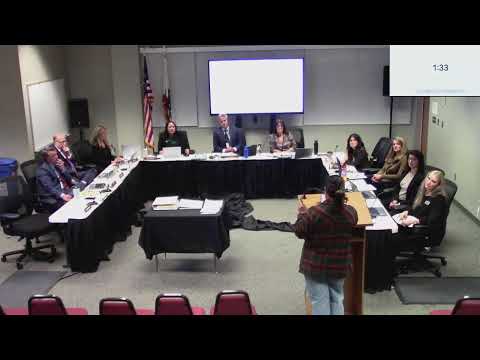
Carlsbad Unified trustees voted 3‑2 on Jan. 22 to adopt an electrification resolution that sets aspirational targets for transitioning district facilities and operations toward all‑electric systems over the next decade.
District staff summarized recent sustainability steps — solar installations at multiple campuses, LED retrofits, HVAC replacements and a conversion of maintenance vehicles to EVs — and proposed aspirational targets for new construction and end‑of‑life equipment replacement. Staff noted the board must evaluate costs per project and may seek state matching funds (Prop 2) and other grants for capital projects.
Public comment featured many students and community members urging adoption: "We deserve to receive an education in a clean, healthy and carbon‑neutral environment," said a student leader. Climate and clean‑energy advocates highlighted potential long‑term utility savings and eligibility for state matching funds; others cautioned that some clean‑energy options carry near‑term costs, estimating a roughly 2% annual utility budget increase (about $50,000) if the district enrolled in certain voluntary green energy service tiers.
Trustees debated precise language and timing. Several trustees said they would support a goal‑oriented resolution but asked staff to clarify that targets are contingent on feasibility, costs and funding; staff agreed implementation would be project‑by‑project and would include cost‑benefit and feasibility analyses. The board adopted the resolution 3‑2; supporters emphasized the resolution signals policy direction and helps leverage grants and matching funds, while opponents cited immediate budget impacts and preferred more cautious language.
What’s next: Staff will include electrification considerations in the district's master‑planning process and evaluate specific projects for feasibility, funding opportunities and cost impacts before bringing project proposals to the board.