Get Full Government Meeting Transcripts, Videos, & Alerts Forever!
Get email alerts on the Education Kindergarten topic
No spam. Unsubscribe anytime.
Carlsbad Unified to study two-school full‑day kindergarten pilot after teachers raise concerns
Summary
District staff recommended an expanded full‑day kindergarten pilot but trustees directed staff to return to the board in March with two-site (north/south) pilot options after several teachers warned that the current AM/PM cohort model enables targeted small‑group MTSS interventions.
Carlsbad Unified School District trustees heard a staff presentation on Jan. 22 about piloting extended‑day kindergarten for the 2025‑26 school year and directed staff to return in March with proposals for a two‑school pilot and associated costs.
Staff described two options: a limited pilot (two schools) and a more expanded pilot (three to four schools). Director Fuentes said the proposed full‑day schedule would raise daily instructional minutes from about 180 to roughly 300, add a dedicated lunch and additional recess and create whole‑class enrichment time while reducing the small‑cohort core‑instruction blocks used now.
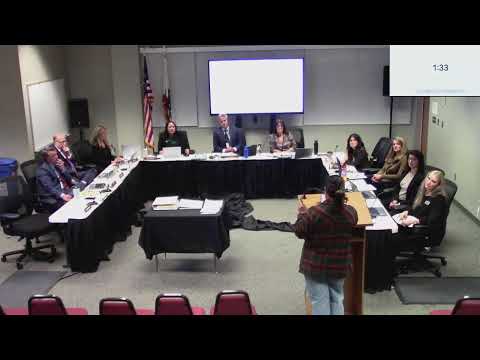
Several teachers and long‑tenured kindergarten staff urged the board to preserve the existing early‑bird/late‑owl cohort model, saying it enables small‑group MTSS instruction and closer interventions. "We have 187 years of kindergarten experience in this room," said a longtime kindergarten teacher, arguing that moving to full‑day could double small‑group sizes and reduce targeted intervention time.
Trustees pressed staff on enrollment distribution, impacts on multilingual learners and students on IEPs, staffing needs (including agency aides and MTSS teachers), site selection criteria, logistical impacts on lunch and arrival/dismissal, and potential transfer or lottery procedures if demand exceeds capacity. Staff said a pilot could be implemented with no added teacher cost if enrollment did not increase, but added that growth or smaller target class sizes could require additional hires and facilities adjustments.
Board members agreed the pilot should be designed to protect special populations and represent the district geographically. After discussion trustees asked staff to survey TK families, identify candidate schools and develop projected costs and staffing plans; staff will bring back refined options — including a recommended two‑school north/south pilot — at the March board meeting. The board did not adopt a formal policy or fund the pilot at this meeting.
What’s next: Staff will survey families and assess site capacity, equity representation and cost implications and return to the board with a proposal in March.