Get Full Government Meeting Transcripts, Videos, & Alerts Forever!
Get email alerts on the City Property Disposition topic
No spam. Unsubscribe anytime.
Panama City commissioners to formalize process for selling city-owned parcels, prioritize affordable housing options
Summary
At a virtual workshop, Panama City staff and commissioners mapped a plan to reach out to about 20–25 unsolicited proposers, create a formal SOP for handling city-owned parcels, and pursue affordable-housing options including partnerships with Habitat for Humanity and community land trusts; staff agreed to deliver a clean parcel/zoning list and highlight four large parcels the next day.
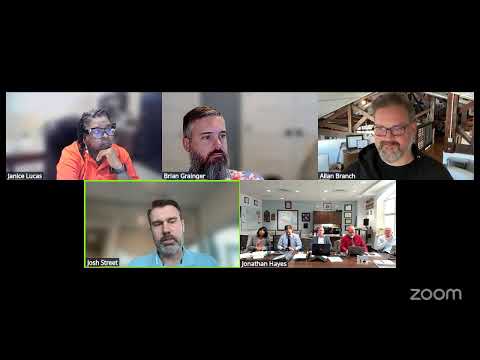
Panama City commissioners and staff convened in a virtual workshop to discuss how the city should handle dozens of unsolicited proposals and hundreds of city-owned parcels, with a focus on accelerating homeownership and clearing inventory that is not mission-critical.
Staff opened the workshop by introducing Assistant City Manager Jared Jones, Sean Self, director of logistics, Sheila Wear, director of housing and community services, and City Attorney Nevin Zimmerman, and said the goal was to put a formal policy on either the April 14 or April 28 commission meeting to standardize how unsolicited proposals and city parcels are handled. The staff member said, "our recommendation is to maintain flexibility on behalf of the city commission and senior staff on these parcels," while acknowledging legal constraints tied to housing and CRA funds.
Commissioners quickly pushed for clearer procedures. "We should reach out to everyone who has sent an unsolicited offer and see if they're still interested," Commissioner Lucas said, arguing that residential lots should spur investment rather than simply maximize sale price. Lucas asked staff to consider land trusts, partnerships with Habitat for Humanity, and accessory-dwelling-unit policies to encourage homeownership over rentals.
Commissioner Granger supported a formal standard operating procedure so the public and staff know how unsolicited proposals will be handled. Commissioner Street urged staff to at least contact prior proposers and to remove most parcels from the infill program (leaving Horizon Park intact) so the city can accelerate activity on simpler lots. Street also suggested delegating rental property management to organizations such as the Panama City Housing Authority or other nonprofits.
Staff and commissioners discussed program mechanics and financial exposure. The conversation noted Horizon Park contains 28 lots with 12 still open; two example sales were described with a sales price of about $275,000 and lot costs near $30,000. Sheila Wear, the housing director, said that if a buyer does not close and no alternate buyer is found, "the city is obligated to $600,000" in the examples being discussed, because the builder required the city to guarantee purchase under the program's terms.
Commissioners discussed alternatives to straight sales, including community land trusts and examples from other Florida cities. Staff referenced Pensacola and Tallahassee as models where land trusts and city partnerships have helped limit speculative flipping; they also noted land trusts require scale and organizational capacity that can be costly to set up. Commissioners recommended staff research state or regional land-trust partners and philanthropic options.
On process and data, commissioners asked for a clean master parcel list that distinguishes vacant lots from city infrastructure (lift stations, stormwater ponds, parks and facilities). Staff agreed to reach out to all unsolicited proposers, provide up-to-date parcel and zoning information, and highlight four parcels of one acre or larger by the next morning for commissioners to review.
No formal motions or votes were recorded at the workshop. The commission set a follow-up virtual workshop for Monday, April 6, and staff said Police Chief Mark Smith and Deputy Chief Chris Shaw will present a spring-break public-safety report at that meeting. The staff member closed by reiterating that staff will return with the requested parcel lists, updated unsolicited-proposer contacts, and recommendations on a formal SOP for commission consideration.