Get email alerts on the Public Comment Rules topic
No spam. Unsubscribe anytime.
Committee adopts new public-comment rules requiring signups and speaker limits
Summary
The Rules & Charter Review Committee voted to adopt proposed public-comment procedures requiring signups (phone/email/in person), closure of the speaker list when the meeting is called to order, and limits of up to three speakers per agenda item and two minutes per speaker.
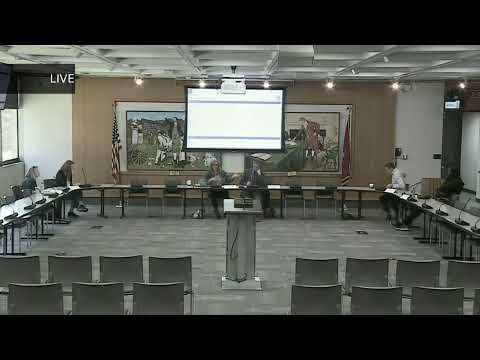
The Rules & Charter Review Committee voted to adopt a set of proposed public-comment procedures at its meeting, approving a package of limits and operational details intended to make public participation predictable and manageable.
Mr. Johnson, staff to the committee, read the provisions aloud: "Persons wishing to speak will provide their name, address, and agenda item topic they wish to speak to," and that signups may be made by phone, email or in person and that the "list of speakers closes once the meeting is called to order." The draft that members considered also limited speakers on each agenda item to three people and allotted two minutes per speaker for item-specific remarks; the committee retained the ability to suspend or modify those limits for "hot button" issues.
Committee members discussed how the rule would be applied: whether it governs only appearances before this committee (members clarified the rules apply to people appearing before this committee) and how staff should administer signups. Several members said the two-minute-per-item limit was consistent with longstanding committee practice and noted that rules can be suspended when more time is warranted.
A motion to adopt the proposed public-comment rules was made and seconded; the committee approved the motion by voice vote.
Why it matters: The new procedures tighten the mechanics of public participation (how and when to sign up, how long an individual may speak) and formalize practices that committees have been following informally. That reduces uncertainty for staff and members and can make meetings run more predictably, but it also means some members of the public will have less time per speaker unless the committee votes to suspend the rules for a particular item.
Next steps: Staff will publish the adopted language and apply the rules at future committee meetings; the committee agreed it can revisit timing and other details if problems arise.
AI generated
The text on this page is AI generated. Summaries, highlights, analysis, and video transcripts are all produced from the original source material.
AI can make mistakes, so if you spot one, and we will fix it for everyone.
Note: the source content is unaltered by us. Any content source we link to, be it a video, an audio recording, or a document, is presented exactly as its publisher released it. That publisher is usually a government body, sometimes an individual official or another organisation.