Get Full Government Meeting Transcripts, Videos, & Alerts Forever!
Get email alerts on the Courts Adr topic
No spam. Unsubscribe anytime.
Local attorney urges Harrison County to explore court alternative dispute-resolution system
Summary
JD McMullen presented a proposal to establish a civil alternative dispute resolution system, saying pooled fees could support operations and judges would retain discretion to refer cases; commissioners agreed to a due-diligence period to study models and funding.
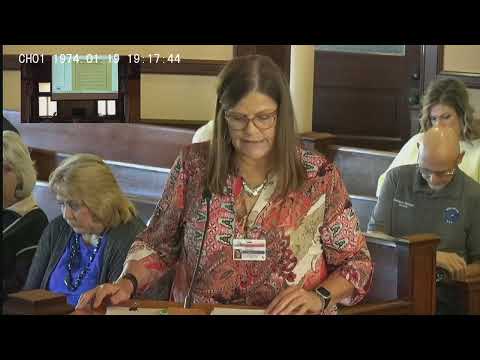
JD McMullen told the Harrison County Commissioners Court on Oct. 8 that the county can create an alternative dispute resolution (ADR) system to handle civil disputes and reduce pressure on the courts.
McMullen, introduced to the court as a presenter on the agenda item, described ADR primarily as mediation and said it offers a low-cost way for litigants to settle cases outside the traditional courtroom. He said Harrison County's recent filings returned about $60,000 in civil-fee receipts for the county during the period he examined, but that pooling resources across neighboring counties could create an operating budget large enough to sustain a system. "There's the potential of pooling all of those counties together; the operating budget is at a minimum of $750,000," he told the court.
The presenter outlined several models the county could consider: a county-run dispute-resolution office, a volunteer mediator pool, a paid-mediator model with modest fees, and a multi-county consortium such as the Paris Junior College arrangement McMullen cited. He emphasized the need for a due-diligence period to determine which approach fits Harrison County, including scope, staffing, fees and whether to charge minimal compensation to mediators if volunteers are insufficient.
In a question-and-answer exchange, the presiding official summarized the court's understanding and asked whether participation would be voluntary for litigants; McMullen confirmed that cases could be referred only if a judge or justice of the peace elected to send a pending civil case to ADR and that filing fees would still be collected through the clerk's office. "They're not gonna choose to go there; it can only be referred if the judge or JP sends them there," the presiding official said; McMullen replied, "Yes, sir."
McMullen offered to work pro bono during an initial period to advise the court on structure and next steps and urged the court to use a yearlong due-diligence window to collect funds and design the model. Commissioners agreed to take time to review the presentation and explore options; the court paused for a short recess at the conclusion of the discussion.
The presentation referenced Texas Civil Practice & Remedies Code provisions listed on the meeting agenda as the statutory basis for establishing a county ADR program. The court did not adopt a final plan during the Oct. 8 meeting; it asked staff and interested parties to investigate models and funding options for future consideration.