Get Full Government Meeting Transcripts, Videos, & Alerts Forever!
Get email alerts on the Immigration Policy topic
No spam. Unsubscribe anytime.
Witness tells committee Medicaid access for noncitizens drives fiscal shortfalls; urges talent-focused immigration reforms
Summary
At a Joint Economic Committee hearing, witness Mr. Di Martino said Medicaid coverage for noncitizens largely drives the negative fiscal impact of immigration and recommended policy changes including excluding noncitizens from Medicaid and adopting point- or market-based immigration selection to better align entrants with AI-era labor needs.
At a Joint Economic Committee hearing, witness Mr. Di Martino, who identified himself as an immigrant from Venezuela, told lawmakers that much of the federal fiscal burden sometimes attributed to immigration stems from noncitizens’ access to Medicaid.
"Half of immigrants are net drains," Di Martino said, adding that "half of the fiscal impacts that are negative are driven just by Medicaid." He suggested that excluding noncitizens from Medicaid would eliminate what he described as the fiscal negative impact of immigration on the federal budget.
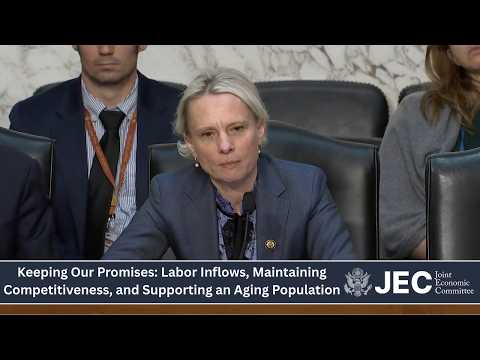
A committee member who introduced the question, describing themselves as an immigrant and former state senator, framed the hearing around how the immigration system can both attract high-skilled entrants and help newcomers adapt to changes in the labor market driven by artificial intelligence and automation. The member recounted arriving in the U.S. 26 years ago and said the committee should consider how to bring in people who "contribute and make real GDP" while acquiring the skills demanded by evolving industries.
Di Martino told the panel his written testimony includes estimates showing that "about half of immigrants are net drains" on federal finances. He attributed some of those fiscal effects to the fact that, after a five-year eligibility bar for most benefits, lawful residents can become eligible for programs such as Medicaid, Medicare and Social Security.
Di Martino offered policy alternatives to the committee, including limiting green-card numbers, allowing market mechanisms such as wage-ranking to influence admissions, adopting a points-based selection system like Australia and New Zealand, and relying in part on employer sponsorship. "You can have a point system," he said. "You can have part employer sponsorship, part points."
Other witnesses and panelists focused on the need for the immigration system and domestic labor-market policies to be flexible and resilient to shifting definitions of "best and brightest." One unnamed witness cautioned that this decade will be "all about the race for talent," urging training and workforce resilience to ensure domestic workers and newcomers can meet AI-related skill demands.
Lawmakers asked about enforcement and administrative changes, contrasting prior registration practices with current policies; a committee member recounted a past system in which immigrants periodically registered through the post office. The hearing also included exchanges emphasizing that concerns about entitlement program costs may reflect program design as much as population changes: as one speaker put it, "We need to fix the programs."
The hearing did not produce formal votes or committee directives on the proposals discussed. Panelists were asked to expand on their written testimony and to provide additional analysis on the fiscal estimates Di Martino cited; next procedural steps were not announced during the portion of the hearing in the transcript provided.