Get Full Government Meeting Transcripts, Videos, & Alerts Forever!
Get email alerts on the Public Transit topic
No spam. Unsubscribe anytime.
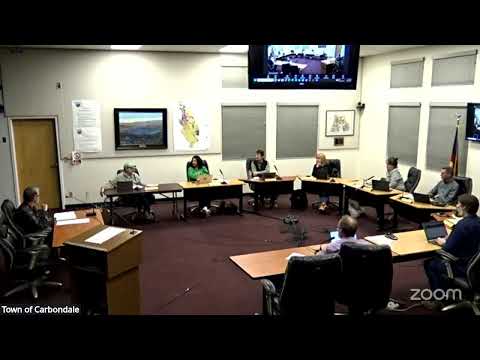
Carbondale trustees direct staff to work with RAFTA after Downtowner ridership review; move to open third van gains support
Summary
After two months of a restricted third‑van pilot, trustees asked staff to engage RAFTA on a holistic first/last‑mile plan and indicated support for opening the third van to general town service to reduce wait times and boost local ridership.
Trustees at a Carbondale work session on transit directed staff to pursue a joint planning effort with RAFTA to evaluate first‑ and last‑mile solutions, after hearing two months of ridership data for the Downtowner service. Staff said the pilot that restricted a third van to routes serving the park‑and‑ride and City Market produced modest ridership gains but had only limited success moving people to the park‑and‑ride.
The trustees said the planning work should happen ahead of the next budget cycle, with a report back by mid‑summer. "Work with RAFTA staff on a planning effort that really evaluates our first and last mile solutions holistically for the town," a trustee asked staff to do; staff agreed that a July report would be a reasonable target. The goal is to assess costs, share responsibilities and consider options such as adjusting routes, pursuing longer leases or electrifying vehicles.
Trustees debated branding and outreach alongside operational questions. Downtowner representatives said the Ride Roaring Fork mobile app is the common platform across multiple towns but that communities have kept local names — Aspen still uses "Downtowner," Basalt uses "Basalt Connect" and Glenwood uses "Ride Glenwood." Mike Fischer, Colorado general manager for Downtowner Group, said the company can support a range of local branding choices and provide data to help shape a fixed‑route or on‑demand circulator. "We always lease all of our vehicles. Ideally for 3 years at a time," Fischer said, describing how lease terms affect long‑term commitments such as wraps, electrification and advertising.
On advertising, trustees were divided. Staff reported an approach from Valley View Hospital to sponsor vehicle wraps, modeled on arrangements elsewhere; some trustees said they were wary of town vehicles carrying conventional commercial advertising but might consider an underwritten, art‑focused wrap that benefits taxpayers. Trustees asked staff to include advertising and fare options among the tradeoffs to present in the RAFTA planning work.
On the third van pilot, several trustees said opening the vehicle to townwide rides — rather than limiting it to the park‑and‑ride zone — could reduce wait times and increase everyday usefulness. "It sounds like people are generally supportive of opening up the use of that third van to just maximize usage and bring down wait times," one trustee said. Staff noted two months of data is a short run, and recommended testing an adjustment and monitoring how the numbers change before making a permanent policy.
Next steps recorded by the trustees: staff will engage RAFTA and Downtowner for a coordinated, costed set of options; report back in the summer with scenarios that include service design, lease length, potential advertising revenues, electrification timing and any fare changes; and consider targeted outreach (including Spanish‑language support and call‑in rides) to increase app adoption and equity.
The trustees took no formal vote on any ordinance or contract during the session.