Get Full Government Meeting Transcripts, Videos, & Alerts Forever!
Get email alerts on the Butterfly Habitat topic
No spam. Unsubscribe anytime.
Committee OKs $185,000 amendment to monitoring contract for airport butterfly habitat to allow expanded safety mowing
Summary
Saratoga County committee approved a roughly $185,000 amendment to the McFarland Johnson contract to fund plantings and continued monitoring of three FAA-funded butterfly habitats, aiming to secure DEC and U.S. Fish and Wildlife certification so wider safety mowing near runways can proceed; the amendment will be covered by available FAA grant revenues.
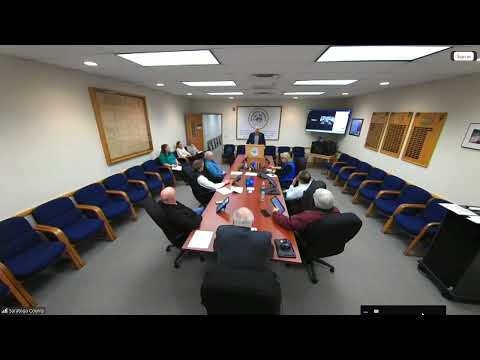
The Saratoga County Airport Improvement Committee voted March 4 to amend a contract with consultant McFarland Johnson by approximately $185,000 to fund planting work and ongoing monitoring of three habitats built with FAA funds.
Ed Cook, the presenter, said the county received roughly $5 million in FAA funding during the COVID period to construct three habitat sites (north, south and east) in the towns of Wilton and Northumberland to compensate for wildlife habitat restrictions adjacent to airport runways. "We spent $5 million to build habitat so we can mow an area that's a couple hundred feet wide for safety purposes," Cook said, describing the tradeoff between habitat creation and the need to clear taller vegetation near runways for safety.
Cook said the habitats have been monitored by McFarland Johnson, which counts nectar-source plants ("looping plants" in the transcript) and butterflies, and that monitoring is a condition for state and federal agencies to declare the habitat "successful." He said the FAA grant reimbursement period is nearing its July deadline and the county plans to recognize grant revenues so the amendment is budget-neutral. The amendment will fund subcontracted plantings and continued monitoring through the required monitoring period.
Committee members asked whether routine butterfly counts continue at the airport and raised concerns that habitats can degrade over time—citing a Clifton Park parcel where blue lupine was overrun by other vegetation and butterfly numbers dropped. Mr. Orander asked whether monitoring at the airport could include baseline counts; Cook said McFarland Johnson's contract specifically covers monitoring of the three constructed habitats but he would inquire about adding baseline monitoring to the scope.
The committee made and seconded a motion to amend the McFarland Johnson contract; the motion carried following the vote. Cook also said that, because the habitats are not yet officially certified as "successful" by state or federal wildlife authorities, the county has coordinated with DEC and the U.S. Fish and Wildlife Service to allow safety-area mowing this year on safety grounds.
Why it matters: The amendment funds the work needed for agencies to certify habitat success and allow mowing of expanded safety areas adjacent to runways, which the county says reduces risks of wildlife strikes for aircraft. The monitoring and planting work is funded by existing FAA grant revenues and, according to Cook, will not require additional county general-fund expenditures.
Next steps: Staff will confirm whether additional baseline monitoring can be added to the McFarland Johnson scope and proceed with the subcontracted planting and monitoring work. The committee did not provide a detailed vote tally in the transcript; the motion was recorded as carried.
(Reporting note: transcript wording such as "loopin plants" or variant spellings has been normalized to "blue lupine" where appropriate; when the transcript did not supply counts or specific vote tallies, the article notes that information was not specified.)