Get Full Government Meeting Transcripts, Videos, & Alerts Forever!
Get email alerts on the Public Works Sidewalks topic
No spam. Unsubscribe anytime.
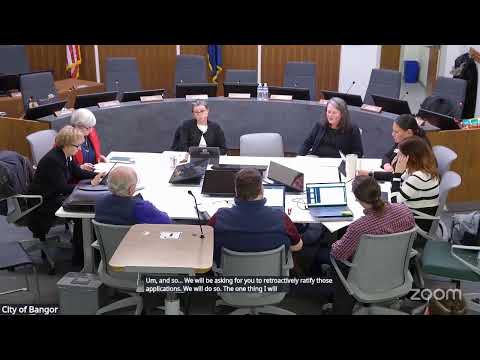
Committee forwards amendment to sidewalk licensing ordinance after debate on scope and vagueness (4–1)
Summary
The committee voted 4–1 to forward an amendment to Chapter 257 that would remove the words 'for construction purposes' so the license requirement covers any occupation or obstruction of sidewalks, esplanades, or streets; councilors raised concerns about vagueness and enforcement discretion.
City Solicitor David Subchak told the Government Operations Committee that a narrow phrase in the city’s sidewalk code—"for construction purposes"—limits enforcement to construction activities and that removing those three words would make the license requirement apply to any storage or obstruction of a sidewalk, esplanade or street.
Subchak said the proposed amendment intends to address recent problems with materials and debris partially blocking sidewalks and causing pedestrians to step into the street. Chief Hathaway explained last season the city confronted blocked sidewalks on Cedar Street and other locations where partial obstructions made passage difficult for people with mobility needs.
Councilors debated potential vagueness and edge cases: one member asked whether the code defines "materials" and raised examples like strollers or parade seating; another said police discretion and common sense would resolve most situations. Several councilors requested narrower language to reduce legal risk in court, while others said the change would clarify the city's authority to require permits for items that impede safe passage.
On a roll-call vote, the committee voted four in favor and one opposed to move the amendment forward to full council.
Next steps: the ordinance amendment will be placed on a council agenda for consideration; staff said enforcement would remain civil and discretionary, and that permits already cover permitted activities such as sidewalk sales or outdoor dining.