Get Full Government Meeting Transcripts, Videos, & Alerts Forever!
Get email alerts on the Emergency Preparedness topic
No spam. Unsubscribe anytime.
Resident describes neighborhood emergency radio drill and urges city coordination
Summary
A community member told the Benton City Council about a recent emergency communications exercise using GMRS and ham radios that tested door‑to‑door checks, resource matching and relays during storm conditions and urged formal ties with Benton County Emergency Management and local schools to distribute preparedness materials.
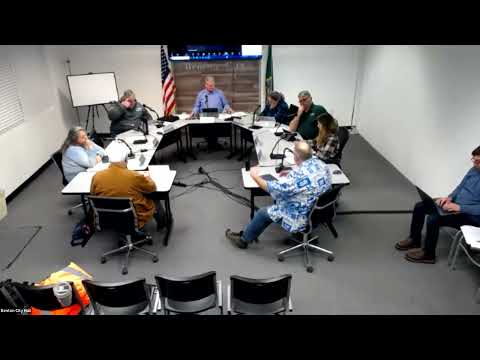
At the Feb. 18 Benton City Council meeting, a visitor described a neighborhood emergency communications drill that relied on GMRS and ham radios to relay needs and match local resources when cellular service and some infrastructure were disrupted.
The speaker, introduced as Shane during the meeting's public‑comment period, said the exercise allowed volunteers to contact every household across West Richland and Benton City within about three hours and highlighted practical outcomes: locating someone with a chainsaw, finding a boat for rescues and helping a resident with limited mobility leave a trailer. "We were able to relay information of needs and solving of problems of the entire West Richland area and Benton City area in three hours," Shane said.
Shane told the council the exercise also included distributing emergency preparedness manuals door‑to‑door and that community members welcomed the outreach. He cautioned that federal response priorities are shifting and urged localities to prepare: "FEMA is... not looking like it's the top of their priority which means that local levels are going to have to be more reliant on themselves."
Council members and staff discussed where such a neighborhood communications effort could fit into official plans. Planner George noted Benton County Emergency Management maintains tiers of response and can provide portable repeaters to tie frequencies together; city staff confirmed ongoing conversations with county emergency management. Shane suggested coordinating distribution of preparedness manuals through schools and inviting representatives of faith‑based groups into a broader civilian communications core.
The visitor's account provided council members with examples of community capability—door‑to‑door welfare checks, ad‑hoc chainsaw and boat resources, and pet accommodations—that officials said could inform city emergency planning. Council did not take formal action at the meeting on the proposal, but staff and council members agreed to explore integration options with Benton County Emergency Management and local partners.