Get Full Government Meeting Transcripts, Videos, & Alerts Forever!
Get email alerts on the Fair Housing topic
No spam. Unsubscribe anytime.
Committee advances bill allowing fair‑housing testers to record oral communications
Summary
The Senate Judicial Proceedings Committee on March 18 approved SB 180, which creates a limited exception to Maryland's two‑party consent rule so fair‑housing testers may intercept oral communications when party to the conversation to gather evidence of housing discrimination; the measure passed 6–4 amid privacy concerns.
The Maryland Senate Judicial Proceedings Committee voted 6–4 on March 18 to report favorably on SB 180, a bill that allows a person working as a fair‑housing tester for a government or nonprofit program to intercept an oral communication if the person is a party to it and the interception is made to obtain evidence of a fair‑housing violation. The bill limits use of any intercepted oral communication to enforcement of federal, state, or local fair‑housing laws and makes the contents inadmissible in other proceedings.
Supporters told the committee the measure updates enforcement tools long used elsewhere and noted previous committee passage in 2024–25. The sponsor said the bill aims to give testers a practical way to document discriminatory conduct by landlords or property managers when routine channels do not produce compliance.
Opponents raised privacy and precedent concerns about creating an exception to Maryland's two‑party consent rule. Senator Folden argued the committee had not yet agreed on other public‑safety exceptions and warned against broadening the consent rule without defined guardrails, saying he was concerned about "piercing the two‑party consent on that fair housing when we can't even come together on a decision" on other serious matters. Several senators also questioned whether the bill included adequate data protections and limits on downstream uses of recordings.
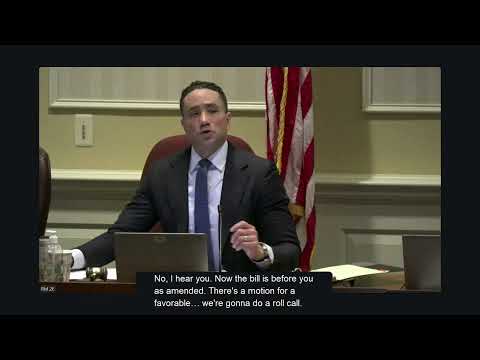
The roll call recorded No votes from Senators Folden, James, Love and McKay and Yes votes from Vice Chair Waldstreicher, Senator Sydnor, Senator West (after confirming procedure on a related bill), Senator Henson, Senator Charles and Chair Smith. Committee members noted the statutory text restricts admissibility to fair‑housing enforcement and that prior legislative action on related measures helped shape the current language.
The bill now moves to the next stage of the process with the committee's favorable recommendation.