Get Full Government Meeting Transcripts, Videos, & Alerts Forever!
Get email alerts on the Un Accountability topic
No spam. Unsubscribe anytime.
Subcommittee chair says U.S. will use appropriations leverage to press U.N. for accountability
Summary
At a hearing at the U.S. Mission to the United Nations, the subcommittee chair said Congress’ enacted FY2026 appropriations law and recent budget cuts give the U.S. leverage to demand measurable reforms at the U.N., citing double-digit funding reductions and new oversight tools.
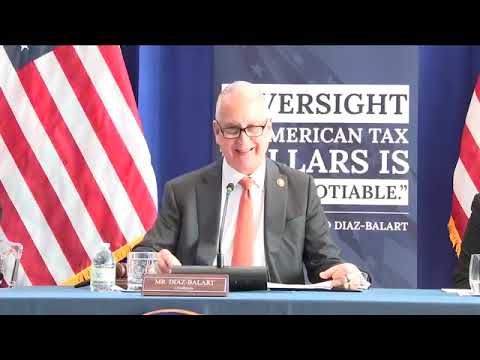
The subcommittee chair opened a field hearing on accountability and reform at the United Nations at the U.S. Mission to the United Nations in New York and said oversight of U.S. taxpayer dollars "is non-negotiable." The chair told members the subcommittee had cut total spending under its purview by 22% over the last three fiscal years and highlighted a 16% reduction in the enacted FY2026 NSRP appropriations act.
The chair said U.N. funding was included in recent reviews that produced double-digit cuts and "stronger requirements that demand accountability and reform." He described provisions in the enacted FY2026 NSRP appropriations act that the transcript identifies as strengthening withholdings until entities meet oversight standards, increasing inspector general and Government Accountability Office access, and barring funding for specific entities named in the law. He said those changes shift key accountability triggers away from U.N. self-reporting toward determinations by the U.S. secretary of state.
The chair criticized U.N. bodies and leadership for shortcomings he said undercut U.S. interests. He cited the Human Rights Council’s inclusion of countries he described as "some of the world's worst offenders," criticized the World Health Organization’s treatment of Taiwan and its pandemic-era decisions, and noted Iran’s seat on the Commission on the Status of Women as examples he said demonstrate the need for reform. "Too often, the U.N. is in direct odds with America's interests," he said.
Addressing Ambassador Waltz, who the chair described as having begun work on reforms, the chair praised the ambassador and said Congress had provided "meaningful, meaningful leverage" to press for budget discipline, reduced bureaucracy, less political bias and stronger internal oversight. The chair framed the committee’s approach as treating U.S. contributions "as leverage, not tribute," and pledged continued pressure to ensure U.N. institutions funded with U.S. tax dollars "support United States security, respect our allies and operate with transparency and accountability."
The hearing transcript records the chair repeatedly casting the U.N.'s central problems as structural—bureaucracy, discretionary funding pipelines, reporting practices and a "weak culture of oversight"—and said that reforms will be difficult but necessary. The chair concluded the recorded portion by commending Ambassador Waltz’s service and introduced another Floridian to continue the hearing.
No formal votes or motions are recorded in the transcript excerpt provided.