Get Full Government Meeting Transcripts, Videos, & Alerts Forever!
Get email alerts on the Municipal Finance Investments topic
No spam. Unsubscribe anytime.
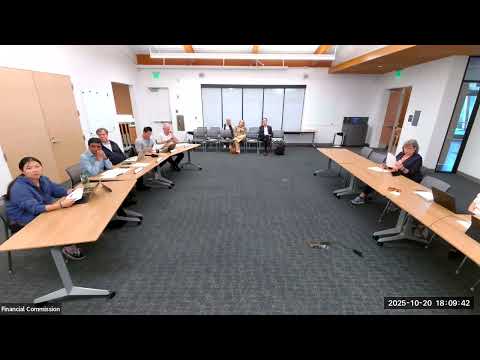
Los Altos financial commission hears investment overhaul, welcomes new commissioner Jonathan Chang
Summary
Public Trust Advisors (now PTMA) briefed the Los Altos Financial Commission on a restructured investment program — including a new short-term ladder with roughly $20 million in a separate custody account, a 1–3 year active portfolio targeting a 1.8‑year duration, and continued use of the CaliforniaCLASS daily liquidity pool. The commission also welcomed new Financial Commissioner Jonathan Chang.
The Los Altos Financial Commission on Tuesday heard a quarterly investment update from Public Trust Advisors — which recently merged with PMA into a combined firm now referred to as PTMA — and discussed a reallocation of the city’s cash and short-term investments intended to protect liquidity for near-term capital projects while preserving yield in longer reserves.
“We serve the city as the investment adviser,” said John Grady of Public Trust Advisors. Grady told commissioners the merged firm brings expanded credit-research and portfolio-management resources and reviewed recent economic indicators, including second-quarter GDP and the Fed’s dot plot, before tying those trends to the city’s portfolio strategy.
The advisers described creating a separate custody account that will hold roughly $20 million moved out of the existing 1–3 year strategy and placed into a short-term, laddered portfolio intended to match anticipated capital expenditures. “This particular portfolio which now has 20 million … was based on a lot of conversations and discussions by the way on cash flow needs for potential capital projects over the next couple of fiscal years,” Grady said. He said the ladder will be funded primarily with U.S. Treasury bills initially, with commercial paper added where appropriate.
Advisers also outlined plans to reposition the remaining actively managed portfolio to a target duration of about 1.8 years and to measure performance against a one-to-three‑year corporate and government index. Staff and advisers said the portfolio’s current book yield is about 4.34% but that yield and total-return reporting will change as the new structure is implemented and fully invested.
Bob Schaw, who oversees the CaliforniaCLASS local-government investment pool, briefed the commission on the city’s liquidity vehicle. He said Los Altos has about $14 million in CaliforniaCLASS and noted the pool’s net asset value stability and adherence to state code investment guardrails. “The pool in total has right now about $2 billion in assets under management with about $260 or so participants,” Schaw said, describing CaliforniaCLASS as the city’s daily-liquidity complement to the short‑ and medium‑term ladders.
Commissioners asked for timing details and were told the advisers hoped to begin laddering investments in the coming days and to have the new benchmark and initial total-return reporting available by the next quarterly cycle. Staff emphasized that the new short‑term custody account and ladder structure were designed to avoid forced security sales to meet capital needs and to give the city more control over scheduled maturities.
The commission also welcomed Jonathan Chang as the new financial commissioner. Chang said he has lived in Los Altos for five years and described his interest in contributing to local civic life.
Next steps: staff and the advisers will proceed with ladder investments, provide benchmarked performance reporting once the new structure is in place, and return to the commission with an updated performance report in the next quarter.