Get Full Government Meeting Transcripts, Videos, & Alerts Forever!
Get email alerts on the Budget topic
No spam. Unsubscribe anytime.
Swansea trustees advance fiscal‑year 2027 budget as officials warn of multi‑fund shortfalls
Summary
Trustees advanced the village’s draft 2026–27 budget after staff outlined deficits across funds, including a $3.3 million sewer infrastructure advance tied to the Triple Lakes development and a general‑fund shortfall that will require a $1.576 million reserve transfer to balance the year.
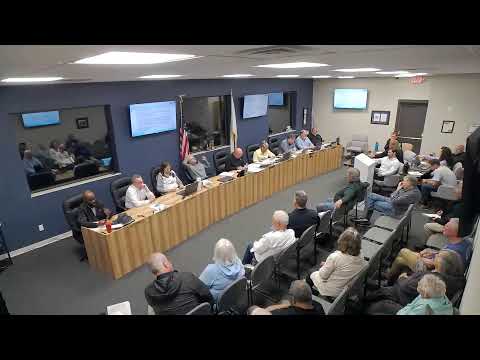
Swansea Mayor Jeff Parker and village finance staff on April 6 presented a draft 2026–27 municipal budget that shows deficits across multiple funds, with the largest single in‑year item a $3.3 million sewer infrastructure advance tied to the Triple Lakes development and a general‑fund shortfall that staff say will be covered in part by reserves.
The budget presentation, led by finance staff, laid out the village’s fiscal structure: the general fund supports day‑to‑day services; enterprise funds such as sewer and business‑district/TIF funds finance capital and utility operations separately. Staff said the $3.3 million is a capital expenditure intended to support sewer infrastructure for the Triple Lakes project; the village expects the cost to be repaid over time through tap fees and revenue generated in the newly created business/TIF districts.
Officials told trustees the general fund shortfall is driven by a mix of unavoidable cost increases and flat revenues. Staff flagged an estimated $350,000 increase in health‑insurance costs, rising energy bills at the sewer plant and street lighting, and a multi‑year reduction in state use‑tax distributions that together reduce revenue by roughly $500,000 compared with prior expectations. Without aggressive cuts or added revenue, staff said the village will use about $1.576 million from reserves — roughly 20% of the reserve balance — to cover the operating gap in 2027.
During public comment, residents urged greater scrutiny of specific spending lines. Todd Ros told trustees he reviewed line items and urged cuts to items he described as “fat,” citing repeated computer purchases and vehicle purchases for departments while the village faces a multimillion‑dollar gap. Other residents asked for simplified, percentage‑based breakdowns that show how much of each tax dollar funds police, fire and other services.
Trustees and staff also discussed planned capital projects that affect restricted funds: a sidewalk/streetscape connector proposed along Illinois 159 and 161 and a $700,000 motor‑fuel‑tax road project. Staff emphasized that TIFF and business‑district funds are capital‑focused and can show large year‑to‑year deficits when multi‑year projects are underway.
Trustee Lanner, chairing the finance committee, asked department heads to re‑scrub capital requests and look for postponable items. While trustees expressed willingness to fine‑tune the budget, several said that absent very deep cuts the village will not present a balanced budget without using reserves or raising revenue in future levy cycles.
The board took the item as a first reading of Ordinance 2016 (the annual municipal budget) and forwarded the budget for additional consideration. Staff told the board they will provide clearer, written breakdowns of revenue sources and department spending as requested by residents and trustees. The ordinance requires a subsequent vote for final adoption.
Trustees were reminded that some projected developer‑funded reimbursements are contingent on development timelines and state actions outside village control; staff said the village is seeking to be conservative in revenue assumptions and will continue monitoring state revenue proposals and local project schedules.
The trustees approved procedural items that advance budget review but did not adopt a final budget at the meeting. The board signaled it will reconvene detailed review before any final adoption date.