Get Full Government Meeting Transcripts, Videos, & Alerts Forever!
Get email alerts on the Higher Education Social Work topic
No spam. Unsubscribe anytime.
Opponents warn repeal of UA School of Social Work mandate could weaken workforce training; committee advances HB 152
Summary
After a public hearing with faculty and social-work leaders urging a 'no' vote, the Senate Finance committee voted to give HB 152 a favorable report; the bill would remove the Legislature's statutory requirement that the University of Alabama maintain a standalone School of Social Work, allowing the university to reorganize the program.
Representative Garrett presented House Bill 152, which would repeal the legislative mandate that the University of Alabama operate a standalone School of Social Work and instead let the university determine the program's organizational structure.
In a public hearing, three opponents urged the committee to reject the measure. "For over 60 years the school has fulfilled that mission and remains the cornerstone of Alabama's human services system," said Reverend Dr. Rusty Bennett, CEO of three nonprofits in Birmingham and a two-time graduate of the University of Alabama School of Social Work. Bennett told senators the program — created in 1965 and producing more than 7,000 alumni — is nationally ranked and that repealing the statutory mandate risks accreditation, national standing and the state's social-work pipeline. "For these reasons ... I respectfully urge you to vote no on this bill," he said.
Brian Bride, who identified himself as a faculty member of the UA School of Social Work speaking as a concerned citizen, told the committee that standalone schools receive different resources and priorities than programs housed inside larger colleges. He cited accreditation rules (for example, an MSW program student–faculty ratio cap he characterized as 12:1) and said those structural supports help attract research funding and productive faculty. "Standalone status does have significant implications for the national reputation of the UA School of Social Work," Bride said.
Molly Cole of the Justice Impact Group, also a social worker, said HB 152 would erase the school's statutory establishment and that perception matters for recruitment and retention. She noted roughly 647 students are enrolled and said rural communities depending on stable services are watching legislative signals about the program's future.
During committee questioning, senators pressed the sponsor and witnesses on what the repeal would mean in practice. Representative Garrett said the bill removes the Legislature's statutory requirement but does not itself eliminate the program: "The university may continue to have the School of Social Work. They may choose to organize differently," he said. Garrett also said outcome-based funding discussions that prompted some of these bills would create an additional pot of funds above base appropriations and that institutions would negotiate different, institution-specific goals with the Legislature.
Witnesses and some senators warned that moving a standalone school into a department could reduce the program's capacity to attract research chairs and external grants; one speaker described bringing in "$2.4 $4 million" for behavioral-health work since joining the university. Senators also raised equity concerns if outcome-based metrics were applied uniformly across institutions with different missions and resources, including historically Black colleges and universities.
Senator Hatcher asked for confirmation that passage would allow the university to reorganize the school as a department; the sponsor confirmed that reorganization would be permitted.
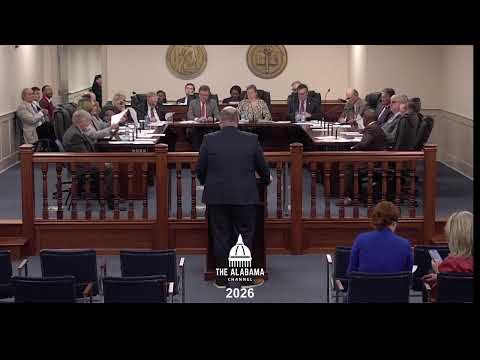
After extended debate and public comment, Senator Wagner moved and Senator Chestine seconded to report HB 152 favorably. The clerk's roll call produced two nays and two abstentions; the committee issued a favorable report and advanced the bill to the next stage.
The committee action does not direct the university to reorganize; it only removes the statutory mandate that the school be a standalone unit. Proponents argued the change preserves university autonomy over curriculum and organization; opponents warned it could make it harder to maintain accreditation, research funding and recruitment that sustain the state's social-work workforce.