Get Full Government Meeting Transcripts, Videos, & Alerts Forever!
Get email alerts on the Code Enforcement topic
No spam. Unsubscribe anytime.
Milton staff propose vacant‑property registration with escalating fees; council debates scope and protections
Summary
Staff proposed a city ordinance to register abandoned and vacant properties with escalating annual fees to incentivize reuse and protect public safety; council members and residents supported the idea for commercial downtown properties but raised concerns about residential, senior, disaster, and county‑owned properties and civil‑enforcement mechanics.
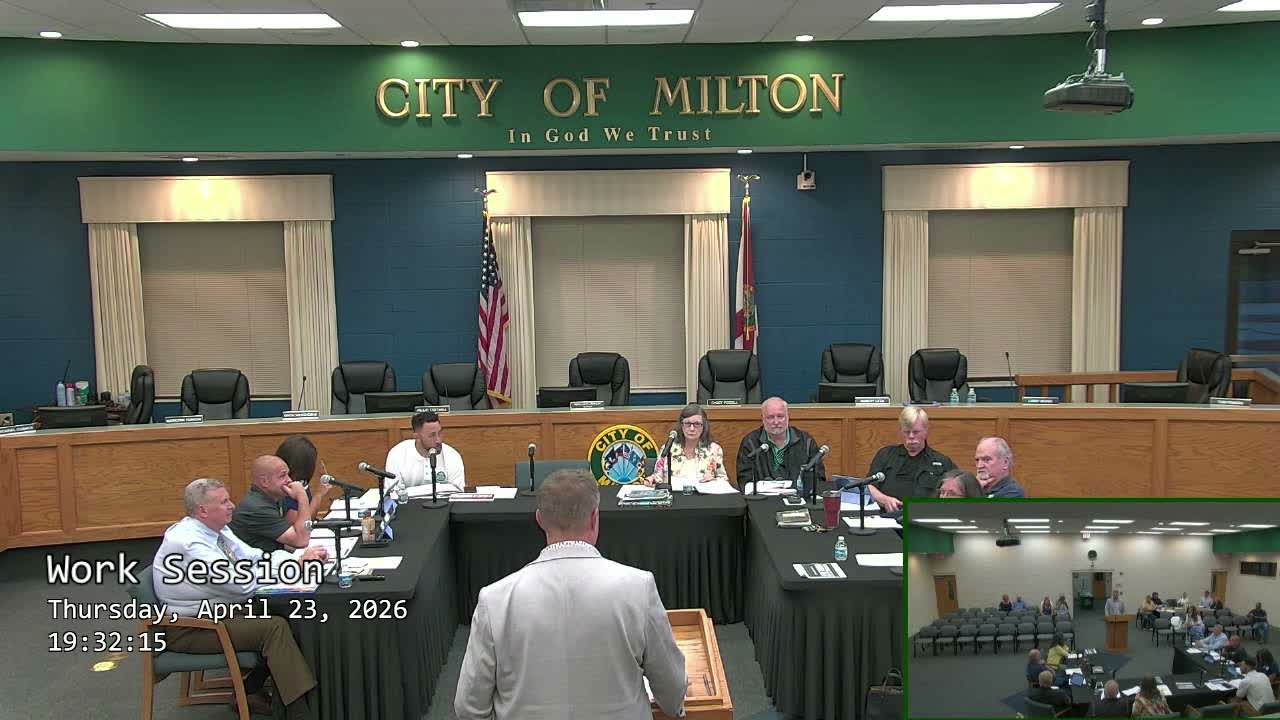
City staff (S7) presented a concept on April 23 for a vacant and abandoned property registration program that would require owners to register empty parcels, provide contact and condition information, and pay an escalating annual fee for non‑compliant properties. Staff said Florida statute authorizes such programs and recommended code enforcement manage registration and the placard system to inform emergency responders about building conditions.
Staff characterized the tool as primarily a redevelopment incentive and public‑safety measure: the registration would create a contact point for owners, inform firefighters and emergency management about building conditions, and escalate fees over time to motivate sale or remediation. "This fee will incentivize them to realize that either you need to get off and start moving with this property or sell it," staff said.
Council members and public commenters broadly supported targeting commercial downtown properties first and phasing the program. Concerns included: imposing fees on long‑distance homeowners who maintain property (vacant but cared for), seniors temporarily in assisted living, and disaster‑impacted owners. Council discussed waivers, case‑by‑case accommodations, and enforcement mechanics (notices, fines, liens and, as a last resort, foreclosure—though staff noted homesteaded properties cannot be foreclosed under state law).
Public commenters, including downtown business owners and residents, urged action to address long‑term vacancies (comic book store, Fisher Hamilton building, a downtown 22‑year vacant dime store) that create fire and sanitation hazards and depress nearby property values. Several residents recommended phasing the program (commercial first), expanding city outreach and offering help (facade grants, small‑business resources) before punitive steps.
Next steps: Council asked staff to refine the policy, consider exemptions and waivers for seniors and disaster situations, and return with a narrower proposal at a June workshop focused on implementation details and enforcement options. Staff emphasized the program can be tailored and compassionately applied case by case.