Get Full Government Meeting Transcripts, Videos, & Alerts Forever!
Get email alerts on the Grid Resilience Nuclear topic
No spam. Unsubscribe anytime.
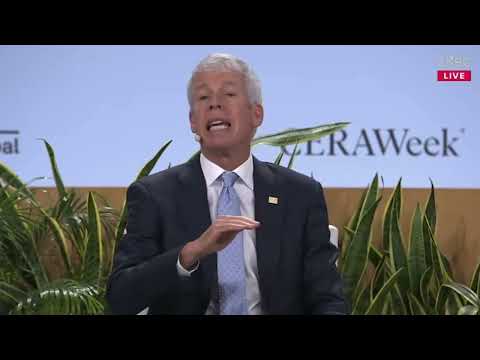
DOE official calls for pragmatic power expansion for AI and resilience; cites lab land offers and small reactors
Summary
Secretary Wright said the Department of Energy will use national-lab land to attract data centers and accelerate small modular reactor (SMR) deployments, citing 300 industry responses and near-term reactor starts to expand electricity supply for AI and grid resilience.
Secretary Wright told attendees that rapid expansion of electricity generation is necessary to meet the demands of artificial intelligence, data centers and resilient critical services.
"If we're going to win in AI, we have to build a lot of electricity generation in the U.S. fast," he said, and described DOE offers to industry to use unused land associated with national laboratories. The secretary said the department controls more than a million acres across lab sites, and that offers drew about 300 responses from industry, including a prompt commitment from AMD's CEO Lisa Su to begin efforts in Oak Ridge.
On grid resilience, he cited Winter Storm Uri as a case study: "It hit 22 states. Pushed the electricity grid from Florida to New England to the edge," he said, noting that about 4.5 million people lost access to electricity and that more than 200 deaths were associated with the event. The secretary emphasized pragmatic steps such as pre-deploying backup generators to avoid service interruptions.
On nuclear power, Secretary Wright highlighted small modular reactors as a fast-moving technology. He said a 5-megawatt test reactor was transported to Utah to be turned on and that several additional small reactors are expected to begin operations in the coming months, with about 11 reactors in the queue over the next 12 months.
He framed these moves as part of a pragmatic energy strategy to keep power affordable and reliable while enabling new industrial and digital capacity. No final regulatory approvals or new rulemakings were announced during the session; the secretary described ongoing coordination with the Nuclear Regulatory Commission and other agencies.