Get Full Government Meeting Transcripts, Videos, & Alerts Forever!
Get email alerts on the Traffic Calming topic
No spam. Unsubscribe anytime.
Renton presents traffic‑calming plan, lists local speed‑cushion projects and evaluation rules
Summary
Renton transportation staff described how resident requests trigger speed studies, detailed tiered treatments (signs to physical cushions), cited a 65% homeowner consent threshold for Tier 2, listed current and planned projects, and said after‑studies measure success using 85th‑percentile speeds.
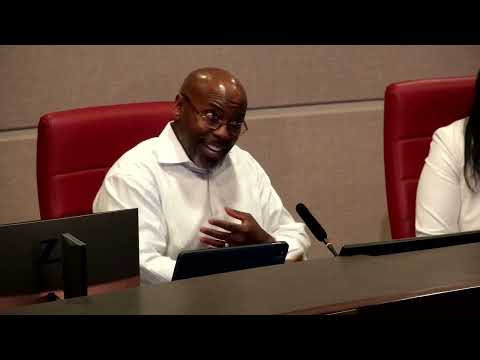
Blake Cost, a transportation engineer with the City of Renton, presented the city’s traffic‑calming program and walked council members through how resident complaints become engineered treatments. The program uses a two‑tier approach: Tier 1 measures such as signing and driver‑feedback signs are installed first, then staff collects speed data; if speeding persists a year later, staff may advance a location to Tier 2, which can include speed cushions, curb extensions, lane‑narrowing or roundabouts.
The presentation explained how staff evaluate and prioritize projects. Engineers use the 85th‑percentile speed, counts of speeders, presence on school walk routes or bus stops, pedestrian activity and crash history to rank locations. Before building Tier 2 hardware, staff survey residents directly affected by the project; Cost said a minimum of 65% resident support is required to proceed to design and construction. After construction, the city conducts before‑and‑after speed studies to measure whether the treatment reduced speeds.
Cost gave examples of recent and planned work. Completed 2025 projects included sets of speed cushions on SW Fifth Place and Aberdeen Avenue NE; Cost read the project cost as $193,000,875 in the presentation materials. For smaller installs the city used in‑house crews — Cost said two sets on 120th Avenue SE cost roughly $6,000 for materials. For 2026, the city plans work on Southwest Langston Road (speed cushions plus new half‑way stop control where sight distance is limited) and a segment of NE 12th Street (Olympia–Union), both currently budgeted and in design. Lake Washington Boulevard cushions remain planned but are on hold because of I‑405 construction.
Council members asked detailed follow‑ups about evaluation and effects. Council Member Alberta asked whether the city performs post‑installation studies; Cost said yes and noted that initial Lake Washington Boulevard results showed 85th‑percentile speeds dropping from about 40 mph to roughly 30–35 mph on one pair of studies. Council members raised concerns about ride quality and potential vehicle damage if drivers hit cushions too fast; staff said cushions follow NACTO guidance (generally 3–4 inches high) and that the city will adopt quality‑control measures targeting a 3‑inch height going forward.
Members also discussed jurisdictional and arterial limitations. Staff emphasized that the traffic‑calming program is aimed at neighborhood collectors and local streets (typically 25–30 mph corridors); arterials often require larger Transportation Improvement Program projects or increased enforcement. For example, NE 4th Street’s speed/geometry likely points toward a traffic signal (staff estimated roughly $1.5 million) or a large roundabout rather than simple cushions. Staff described multiple ways residents can request traffic‑calming reviews (city website, Renton Response, email to the listed staff contact or a lobby visit) and estimated roughly two to three speeding requests per week.
City staff said the recent budget increased dedicated traffic and pedestrian safety investment; staff cited approximately $500,000 per year allocated for traffic improvements but emphasized competing budget priorities and rising construction costs.
The council did not take formal action during the presentation; staff said projects will proceed through the city’s normal design, public‑outreach and construction processes. The transportation item concluded with staff noting next steps: continued design on budgeted 2026 projects, resident outreach where required, and scheduled after‑studies to verify outcomes.