Get Full Government Meeting Transcripts, Videos, & Alerts Forever!
Get email alerts on the Budget topic
No spam. Unsubscribe anytime.
City Manager Joan presents FY2027 budget; recommends no mill‑rate increase amid rising school debt service
Summary
City Manager Joan presented the manager's proposed fiscal 2027 budget April 6 in Norwich, recommending no change to the mill rate (34.51) while warning that debt service tied to $385 million in school construction will push debt costs higher in coming years.
City Manager Joan presented the proposed fiscal year 2027 manager's budget to the Norwich City Council on April 6, outlining priorities to minimize taxpayer impact while sustaining essential services and investing in infrastructure and education. "Our goal is to minimize the impact on taxpayers while sustaining essential services," Joan said.
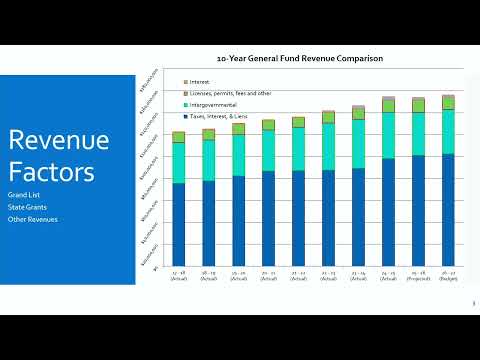
Joan said the citywide budget (excluding Norwich public works) totals about $64 million for the coming year and recommended no increase in the mill rate, which is proposed at 34.51 and unchanged from the prior year. She described the city's revenue mix—taxes, intergovernmental aid and fees—and said the grand list is projected to be about 2.855 (billion), producing roughly $1 million in additional revenue without a tax increase.
A major fiscal driver is school construction financing. Joan said the city is financing roughly $385 million in school building projects, a multi‑year commitment that will raise annual debt service from about $6 million in FY27 to roughly $15.5 million by FY32. "That increase in debt service is the major driver of the budget increases," she said. The manager noted the state has approved 80% reimbursement for two projects and is pursuing similar aid for two more; whether the administrative building will be included remains unresolved.
Joan flagged a gap between the board of education request and the manager's recommendation: the manager proposes roughly a 0.5% increase for the schools while the schools requested about 4–4.5% more. She said pending state changes to the school funding formula could produce additional education revenue—"I've heard any numbers from one and a half million to two and a half," she said—which, if realized, would be dedicated to schools.
Other highlights include: an ordinance‑mandated $3.1 million allocation for capital improvements; a recommendation to modestly reduce current contributions to the other post‑employment benefits (OPB) fund (about $600,000 shifted toward debt service this year); a steady projection for license and permit revenue tied to expected construction activity; and continued reliance on grant funding (including recent federal and state grants and NPU grants) for targeted projects such as downtown development and sewer improvements.
Joan described uncertainties in interest revenue projections and noted the city continues efforts to improve motor vehicle registration collections and grand list accuracy; she characterized interest projections as contingent on broader economic conditions.
The manager recommended the council defer detailed questions until department hearings scheduled the following week; the council will hold department hearings starting April 7 and the public hearing on the manager's budget on April 15. The council plans to adopt a preliminary budget on May 4 and hold an additional public hearing on May 11; the budget process must conclude roughly by mid‑June or the manager's budget would take effect by default.
The presentation concluded with Joan asking the council to review department budgets at the upcoming hearings. The council will consider the manager's recommendations and any public input through the scheduled hearings before final adoption.
Next procedural steps: department budget hearings (April 7 onward), public hearing on the manager's budget (April 15), preliminary adoption (May 4), and final council action in mid‑June.