Get Full Government Meeting Transcripts, Videos, & Alerts Forever!
Get email alerts on the Cannabis Tax topic
No spam. Unsubscribe anytime.
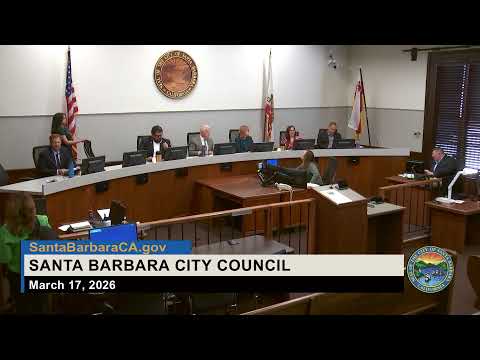
Council adopts 2% increase to cannabis tax for nonmedical retail, passes 5–2
Summary
After staff presentation and public comment from operators and residents, the council approved a 2% increase to the city’s nonmedical retail cannabis tax to shore up general‑fund revenue, with the ordinance expected to be effective May 7 and the tax increase to take effect July 1.
The Santa Bárbara City Council adopted an ordinance to raise the city tax on nonmedical retail cannabis sales by 2 percentage points, targeting nonmedical retail categories while keeping medical dispensaries at the existing rate.
Finance Director Linsai provided background on the city’s cannabis tax structure under Santa Bárbara Municipal Code section 5.42.250 and showed that cannabis revenues peaked in fiscal 2021 at about $1.9 million and have since declined. Staff said the Finance Committee and city consultants (HDL) recommended a modest 2% increase for nonmedical retail to boost general‑fund revenue and help address projected FY2026 shortfalls; the ordinance was presented for single‑reading adoption.
Several speakers addressed the council during public comment. Operators cautioned that cumulative taxes (local, state excise and sales tax) already produce an effective tax rate around one‑third of retail price, risking loss of legal business to neighboring cities or the illicit market. A local manufacturer and operator urged moderation, noting projected additional revenue of roughly $125,000–$300,000 annually under staff assumptions and warning of migration of customers to lower‑tax jurisdictions or illicit sellers.
Councilmembers debated revenue projections, competitiveness with neighboring jurisdictions and the potential regressive nature of a sales‑type tax on consumers. Supporters cited the modest projected revenue increase and the need to stabilize the general fund; opponents warned that higher taxes could further depress sales and net revenue.
The council moved the staff recommendation; the motion passed with a 5–2 roll call. The transcript records Councilmembers Santa María and Freeman as voting against the motion. Staff said the ordinance would be effective May 7 and the tax increase would be scheduled to take effect July 1 to align with the fiscal year.