Get Full Government Meeting Transcripts, Videos, & Alerts Forever!
Get email alerts on the Administrative Procedure topic
No spam. Unsubscribe anytime.
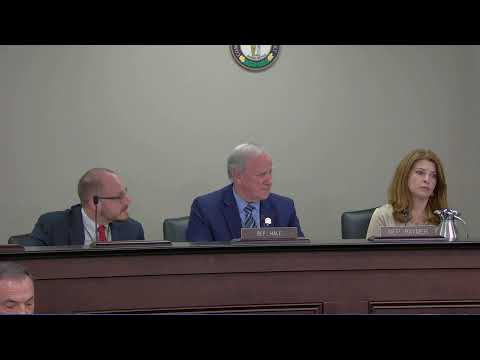
House committee advances permit 'shot‑clock' bill after supporters pledge tolling fix
Summary
The House State Government Committee approved Senate Bill 52 (with a committee substitute) to require permitting authorities to issue clear application requirements and to meet statutory decision deadlines; the committee vote was 16 yeas and three pass votes, and sponsors said an amendment to toll the clock for incomplete submissions is expected on the floor.
The House State Government Committee voted to advance Senate Bill 52, a measure that would require permitting authorities to set clear application requirements and to decide permit applications within a defined statutory period — commonly called a “shot clock.” The committee adopted a committee substitute that attaches provisions of House Bill 467 to SB 52 and then approved the amended bill by roll call.
Senator Steve Rawlings, sponsor of SB 52, told the committee the bill “implements common sense procedure reforms to protect individuals whenever a permit is required to engage in constitutionally protected activity,” including a meaningful impartial appeal process and judicial review separate from the permitting authority.
Senator Greg Elkins, who spoke in support, described long permitting delays in his own experience and urged the committee to act. “It was 380 plus days before I got the first notice of deficiency... it was 6 years just getting to the determination in what should have been 180 days,” Elkins said, recounting a private sector project that was delayed for years.
Witnesses raised concerns about how the bill would treat incomplete or deficient applications. Dr. Eric Ross, executive director of the Kentucky Psychological Association, welcomed reforms but asked for protections so professional licensure boards and applicants are not harmed by unintended consequences. Audrey Ehrnschwender, attorney for the Kentucky Resources Council, said the bill’s current draft lacks explicit tolling language for incomplete submissions and warned that sections 3 and 4 could “selectively shift the burden of persuasion” and conflict with existing administrative procedures set out in KRS Chapter 13B.
Sponsor and supporters responded that they intend to adopt a clarifying floor amendment to pause (toll) the statutory clock when an application is incomplete so that agencies may request missing materials and applicants may complete them before the clock resumes.
The committee recorded 16 yes votes and three pass votes on SB 52 as amended by the committee substitute; a title amendment was also adopted. Committee members and witnesses said the sponsor has committed to a floor amendment to add the tolling language discussed in testimony.
The bill now moves to the full House for further consideration.