Get Full Government Meeting Transcripts, Videos, & Alerts Forever!
Get email alerts on the Zoning Rewrite topic
No spam. Unsubscribe anytime.
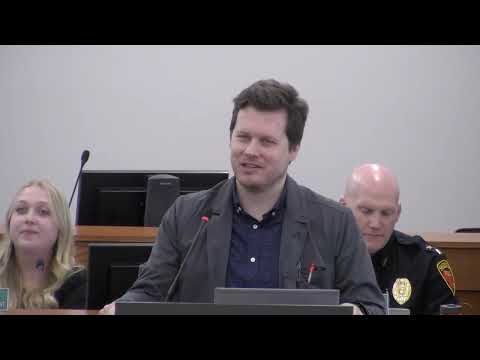
Sheboygan Committee of the Whole hears major objections as draft zoning code shifts approvals to staff
Summary
At a March 24 Committee of the Whole, consultant Sam Schultz and staff outlined a comprehensive zoning-code rewrite stressing objective standards and fewer conditional uses; residents pressed for restored environmental protections and limits on data centers, and aldermen voted to refer further work to the next council term.
Sheboygan City’s Committee of the Whole on March 24 reviewed a comprehensive draft zoning code that would streamline administration, broaden housing allowed by right and move many site-level decisions from discretionary public hearings to objective staff review.
Consultant Sam Schultz of Von Briesen and Roper told alderpersons the draft aims to reduce subjective approvals, make decisions easier for staff to defend under Wisconsin law and simplify the code into four articles covering procedures, districts, uses and citywide design standards. Schultz cited Wisconsin Act 67 (2017) and Act 16 (2023) as reasons to adopt clearer, objective standards that reduce legal risk and speed reviews.
The nut of the debate was procedural: several residents and multiple alderpersons said the draft goes too far in shifting authority to the zoning administrator and in some places makes otherwise controversial developments—most notably large data centers—permissible without prior Plan Commission or Common Council review. Lisa Salgado told the Committee the rewrite "strips authority away from elected officials" and raised a procedural challenge over consultant fees, saying a $60–$70,000 contract was not properly approved by the Council. Mary Dotz urged explicit safeguards for data centers, including performance standards and conditional review so local officials retain discretion.
Sam Schultz and staff responded that the draft does not eliminate the Council’s ultimate authority: rezoning, comprehensive-plan decisions, plats and other major legislative actions remain Council and Plan Commission responsibilities. Schultz said the proposed approach consolidates environmental protections into a single Natural Resource Protection overlay and keeps shoreland and floodplain regulation in separate municipal chapters (107 and 109) that reflect state DNR and statute requirements.
A long public comment period included repeated requests that the draft explicitly restore specific environmental protections for woodlands, lakeshores and wetlands that some residents said were missing from online materials. Friends of the Black River Forest lawyers submitted written comments into the record and raised concerns that some draft language could be used to modify an existing Kohler Company conditional-use permit without further public review.
Alders used a series of show-of-hands straw polls to guide staff revisions. Highlights of committee direction included unanimous support to reinsert or ensure the Natural Resource Protection overlay retains protections for woodlands, lakeshore and wetlands; a majority preference to require Plan Commission/Common Council review for large-scale or high-hazard industrial uses even where no rezoning is required; and several votes to liberalize accessory dwelling unit (ADU) allowances (including permitting ADUs on duplex and triplex lots, with emergency-access provisions to be clarified).
On data centers, staff said the draft currently treats standalone data centers as industrial uses in certain districts and that some sizes would be allowed administratively if they meet objective standards; staff proposed the Council consider size thresholds (examples discussed ranged from 50,000–100,000 square feet) or other triggers that would require a public hearing. The Chair announced a separate Committee of the Whole meeting dedicated to data-center policy after the new Council term begins (post-April 20).
The Committee voted to refer the draft to the Common Council for the new term to allow additional review and to schedule further Committee of the Whole sessions; a motion to adjourn sine die (if no meeting is scheduled before April 20) carried by voice vote. Staff committed to produce clarifying text, follow up on contract documentation, restore or clarify environmental provisions within the Natural Resource Protection overlay, and draft options for thresholds that would trigger public review for very large industrial projects.
What happens next: the draft zoning ordinance will be referred to the Council for the next term and returned to future Committee of the Whole sessions for additional public discussion, redlines and staff-supplied amendments. The Chair announced a dedicated data-center discussion will be scheduled after April 20.