Get Full Government Meeting Transcripts, Videos, & Alerts Forever!
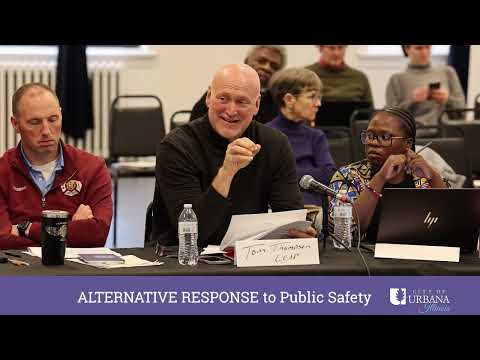
Urbana task force debates when to send community responders and when police are needed
Summary
Urbana’s Alternative Response Task Force reviewed 97 sample call narratives and wrestled with calls that split opinion—particularly ‘remove subject,’ certain crisis-intervention and disorderly-subject scenarios—concluding that better dispatch screening and clear escalation protocols could allow many calls to be handled by community responders while incidents that indicate violence or evidence of a crime should prompt police or co-response.
Urbana’s Alternative Response Task Force spent its fourth meeting reviewing 97 scenario narratives to decide which 911 calls could be routed to unarmed community responders instead of police. Facilitator D opened the session by saying the group would focus on calls with less than 75% agreement and that the scenario reviews help shape recommendations for Urbana.
Amos, presenting the coding results, said the panel’s sample showed “there was 75 to 100% of you agreed that … eligible for community responders” for many call types, but that certain categories—crisis intervention and disorderly-subject calls—had far less consensus. The pie-chart breakdown showed the largest share of community-responder–eligible calls involved conflict resolution or service-connection tasks, while…
Already have an account? Log in
Subscribe to keep reading
Unlock the rest of this article — and every article on Citizen Portal.
- Unlimited articles
- AI-powered breakdowns of topics, speakers, decisions, and budgets
- Instant alerts when your location has a new meeting
- Follow topics and more locations
- 1,000 AI Insights / month, plus AI Chat