Get Full Government Meeting Transcripts, Videos, & Alerts Forever!
Get email alerts on the Planning topic
No spam. Unsubscribe anytime.
Planning director: city will audit ordinances and processes to lower housing costs
Summary
David Hiddle, Bloomington’s director of planning and transportation, said the city has commissioned an external audit of ordinances and permitting to remove redundant rules and bottlenecks and make housing development faster and less expensive; he also described the state reporting requirement under House Enrolled Act 1001.
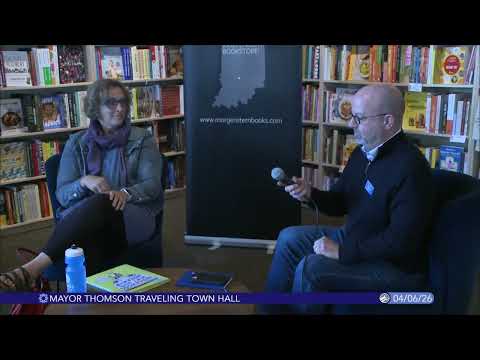
David Hiddle told the traveling town hall that local ordinances have grown "layers of rules on top of layers of rules" that increase cost and complexity for housing development and that his department commissioned a third-party external audit of planning, utilities and related processes to identify unnecessary steps, improve coordination and reduce delays.
"We’ve spent the last 60 years just making our ordinances bigger and bigger... they don't really make the place that they serve better necessarily, but they do make it a lot more expensive and a lot more hard, a lot more difficult to build things," Hiddle said. The audit will look for redundant approvals, communication gaps and bottlenecks with the goal of making the process more predictable and less costly for builders.
Hiddle also explained that state-level legislation produced a reporting requirement: House Enrolled Act 1001, while diluted from its original form, requires cities to report annually on housing activities, zoning changes and efforts to increase housing access. "We have to report to the state now every year on our housing activities," he said.
On specific zoning tools, both Hiddle and the mayor discussed accessory dwelling units and state examples that compel local changes, but Hiddle emphasized local ordinance reform and process improvement as near-term levers the city can control.
The planning director framed the audit as part of a strategy to allow a wider range of housing types and lower costs for residents and developers; results and proposed ordinance amendments were presented as items the public and council should expect in coming months.