Get Full Government Meeting Transcripts, Videos, & Alerts Forever!
Get email alerts on the Public Safety topic
No spam. Unsubscribe anytime.
After debate, Select Board declines animal-control IMA renewal and directs hiring of two on-call ACOs
Summary
Citing service gaps and response-time concerns, the Select Board voted to decline renewal of the intermunicipal animal-control agreement and to pursue creating two on-call animal-control officer positions using existing ACO funds; staff will develop job descriptions and implementation steps.
After extended discussion of service levels, response times and shelter operations, the Town of Templeton Select Board voted April 6 to decline renewal of the current intermunicipal animal-control agreement and to direct staff to create two on-call animal-control officer positions funded within the town's existing animal-control budget.
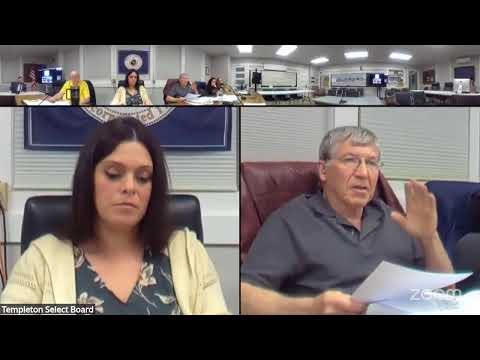
Board member Mr. Toe presented a detailed proposal to replace the IMA with a locally managed on-call model, saying the town's current arrangement limits coverage to a narrow daily window and forces residents to rely on police or to handle incidents themselves outside those hours. "Residents receive timely service when outside of the previous 10-hour daily window and this maintains flexible responsive services without increasing costs," Mr. Toe said when recommending two rotating on-call officers.
Town staff cautioned that an on-call model would require careful scheduling and could shift some burden to police or require additional stipends; staff also noted that termination provisions in the IMA require notice and may trigger compensation for completed services. Some board members voiced concern about recruitment for on-call roles and potential bargaining/coverage issues; others emphasized local control and improved responsiveness.
The board moved and seconded a motion to decline renewal of the IMA and to authorize staff to implement two on-call ACO positions and related administrative tasks (job descriptions, hiring, training and regulatory coordination). The motion carried in the public meeting by recorded roll call; the board authorized the administrator and select board to take actions needed to implement the change and to coordinate with the Massachusetts Department of Agricultural Resources on certification and reporting requirements.
Next steps: town staff will draft job descriptions, outline compensation/coverage patterns and return with implementation costs and a timeline for board review. The board asked staff to ensure compliance with state reporting and to coordinate with the police department on after-hours responses during transition.