Get Full Government Meeting Transcripts, Videos, & Alerts Forever!
Get email alerts on the Municipal Budget topic
No spam. Unsubscribe anytime.
Rising school costs and a 17.5% health-insurance bump squeeze Plainville's budget, officials say
Summary
Officials warned that Tri-County and local school budget increases, lost state distributions, and a 17.5% jump in health-insurance costs are straining Plainville's budget and will force difficult trade-offs in the coming fiscal year.
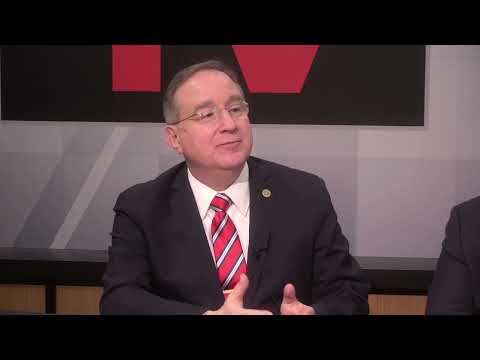
Plainville officials told North TV viewers that school budget requests, a recent reduction in state-distributed revenue, and sharply higher health-insurance costs are tightening the town's fiscal outlook.
"We put almost $300,000 in that account to be ready," Town Administrator Brian Noble said of the town's snow-and-ice reserve, noting that other budget pressures remain. Chair Brian Kelly said the finance committee will take testimony from three school districts on March 4 as officials work to reconcile competing demands.
Officials said Tri-County's growth-related cost is already affecting local property-tax burdens; Kelly said the Tri-County impact was about $987,000 this year toward a longer-term $1.2 million figure, while Planeville Public Schools requested roughly $500,000 in increased spending this cycle. Kelly framed the problem under Proposition 2—2, which limits how much property-tax revenue can rise without a voter override.
Kelly also described a recent change to state budgeting that removed racing-revenue allocations after town meeting, costing the town about $134,000 and leaving the fiscal year starting with a shortfall.
Health-insurance costs are another major pressure. "Our health insurance went up 17 and a half percent," Noble said, adding that Plainville's self-insured plan (run in partnership with neighboring North Attleborough) has been driven upward primarily by prescription drug prices, including GLP-1 medications.
Officials said the immediate choice is to use certified free cash to absorb some one-time costs, which reduces the pool for planned capital projects, or to shift the burden into the levy in future years; both choices carry trade-offs for services and capital investments.
Kelly said finance-committee hearings and town meetings in March and April will be the next steps for reconciling school requests and town services with limited revenue.