Get Full Government Meeting Transcripts, Videos, & Alerts Forever!
Get email alerts on the Public Safety Mt Baker topic
No spam. Unsubscribe anytime.
Residents and businesses press Seattle Council for action on Mt. Baker safety and sanitation
Summary
More than a dozen residents, volunteers and business owners during public comment described recurring encampments, drug dealing and property damage in Mt. Baker and North Rainier Valley, calling for faster enforcement, increased outreach and treatment and better coordination across agencies.
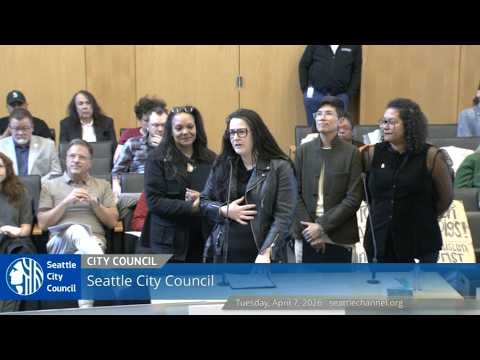
Residents and business owners from Mt. Baker and the North Rainier Valley urged the Seattle City Council on April 7 to respond more quickly to encampments, open drug use and repeated property crimes they said have degraded neighborhood safety and commerce.
Steve, a volunteer with a local cleanup group, said his team mapped more than 200 unhoused people in a corridor near light rail and cited financial losses to businesses: “The total financial impact for just these 34 over the last two to three years in arson, theft and property damage is $2.35 million,” he told the council. He urged a “COVID‑level response” to drug dealing and to get dealers off neighborhood streets.
Business owners described repeated break‑ins, fires and threats that they said harmed employees and customers. John, owner of Deany Construction, said his multigenerational company faces safety and operational problems when encampments and open drug use spill into driveways and active work zones.
Multiple speakers asked the council to expedite enforcement when people are endangering traffic or construction zones, increase neighborhood patrols and ensure outreach teams and treatment providers have a pipeline of stable sites to prevent repeated encampment cycles. Community speakers also urged stronger interagency coordination so providers can stabilize service sites, and they asked the council to prioritize immediate responses when public safety is at risk.
Council members accepted public comment and moved into the scheduled agenda items; the council did not take immediate formal action during the meeting on the specific neighborhood requests.
Speakers who testified included volunteers and residents active in Mt. Baker cleanup efforts, faith leaders who run meal programs and business owners from the Rainier Valley; the full transcript lists names and extended accounts given during the two‑minute public comment slots.