Get Full Government Meeting Transcripts, Videos, & Alerts Forever!
Get email alerts on the Local Budget Revenue topic
No spam. Unsubscribe anytime.
Kenmore council weighs three revenue paths — Kenmore levy, MPD, and public-safety sales tax — and asks staff to prepare proposals
Summary
Councilors debated whether to pursue an enhanced local levy for climate, housing and services, a metropolitan parks district, or councilmanic sales taxes for public safety and transportation; they directed staff to prepare paperwork, scope the Kenmore option, and model 2026–2028 scenarios for council consideration.
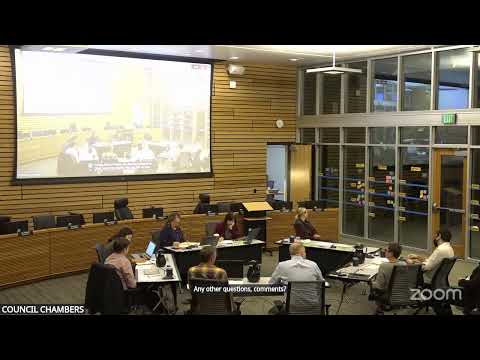
Kenmore — The Kenmore City Council spent its May study session probing options to close a mounting budget gap, directing staff to prepare formal proposals and financial models for several possible revenue measures.
City Manager Terry Kilgore framed the problem: a forecast that already shows a cumulative operating deficit of just over $20 million and reserves likely to fall below targets by 2028–29. "All of the numbers that have been presented to you presume at least one councilmanic option is pursued," Kilgore told the council, describing a menu of options that includes councilmanic sales-tax levies (transportation, public safety), levy lid lifts, a metropolitan parks district (MPD), and a bundled “Kenmore” enhanced levy to fund climate action, affordable housing, human services and economic development.
The session featured sustained debate over timing, electability and scope. Council Member Culver argued against rushing an MPD, citing statutory limits on MPD powers and a high historical failure rate for MPD ballot measures in the state. "MPDs are also an underperformer," Culver said, pointing to MRSC data he summarized for the council. He and others also warned that public-safety sales-tax measures have a mixed record and urged negotiation with neighboring jurisdictions and additional cost-control work before asking voters to raise revenue.
Council Member Lutus, who said he has advocated for an MPD, said survey work and local political timing could make an MPD viable if the city brings a clear, specific project to voters. Other council members urged discipline about what is put on the ballot and recommended separating measures where feasible (for example, pairing a housing levy with a climate levy rather than a single omnibus package).
Public comment opened the meeting. "We need you to preserve, protect what affordable housing we have now, as well as add to what is required," Stacy Valenuela told the council, urging the city to prioritize deeply affordable units and to pursue collection of a $560,000 debt she said was owed by a local rowing club.
On technical and fiscal details, speakers cited staff estimates and prior studies. Kilgore and councilors discussed modeled numbers showing a Kenmore-style enhanced package could generate roughly $3.4 million annually for staffing and ongoing activities and $4.4 million if a roughly $1 million-per-year special-projects component were included. Council members also cited policing-cost comparisons discussed in the meeting: a cited current contract cost of about $446,000 per officer with King County Sheriff's Office versus modeled alternatives ranging from roughly $262,000 per officer for a regional partnership to about $314,000 per officer for a standalone Kenmore police department; several council members said a competitive police-services study could produce leverage to lower contract costs.
Rather than take votes, the council completed an anonymous "alignment" exercise using colored Post‑it notes to indicate individual interest in particular measures and dates. Staff summarized the results to the council: the councilmanic public-safety sales-tax option drew concentrated support for a 2026 placement on the ballot, and councilmanic transportation and a Kenmore-style levy also showed pockets of support. The exercise was advisory; city staff said formal council actions would be required for any placement of measures on the ballot.
After the exercise, staff outlined next steps: prepare formal paperwork and draft ordinances or resolutions to bring councilmanic public-safety and transportation proposals back to the council for separate votes, scope and model the Kenmore enhanced‑levy options with clearer definitions of projects and funding levels, and run revenue and sequencing models through 2028 to show the fiscal impacts of different combinations. Staff also said they would need professional assistance for ballot-language development and outreach.
The council did not adopt any ordinance, motion, or ballot measure at the session. The study-session discussion produced direction to staff rather than a formal vote: to return with draft materials and financial models in the coming months so the council can consider whether to place one or more measures on the 2026 or subsequent election calendars.
The council adjourned after directing staff to prepare a menu of next steps that will include rate modeling, clearer scopes of the Kenmore package, and options for sequencing MPD or public-safety proposals in 2027–28.