Get Full Government Meeting Transcripts, Videos, & Alerts Forever!
Get email alerts on the Housing Strategy topic
No spam. Unsubscribe anytime.
Kenmore planning commission kicks off 2026 housing strategy update, emphasizes need for deeply affordable units
Summary
The Kenmore Planning Commission began a multi-month update to its 2026 Housing Strategy Plan, focusing staff and commissioners on producing more units at or below 50% area median income. Staff emphasized that deeply affordable housing typically requires subsidy and ARCH or other regional funds to assemble viable projects.
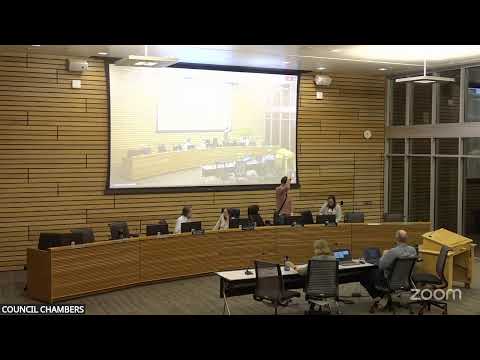
Kenmore — The Kenmore Planning Commission on April 7 began a multi-meeting review of the city's 2026 Housing Strategy Plan, with staff pressing the commission to focus policy tools on producing units serving households at or below 50% of area median income.
Todd Hall, the city's principal planner, told the commission the update is intended to implement the 2024 housing element and respond to recent state-level changes: "We need to think about proactive strategies to hit those numbers, particularly at the lower end of the income spectrum," he said, outlining an action-oriented schedule that anticipates draft code work this spring and a tentative public hearing in September.
Why it matters: Kenmore faces both high home prices and a growing share of cost-burdened households. Staff presented data showing that while Kenmore has zone capacity overall, market dynamics are not producing the large volumes of deeply affordable housing the city's regional targets call for. Commissioners and staff agreed that code changes alone are unlikely to close that gap without subsidy and regional partnerships.
Staff presentation: Development Services planners Samantha Loyuk and Riley Ross Botham reviewed statewide permit trends, builder-confidence indexes and local permit timelines, and Todd Hall summarized the housing-element priorities that the HSP must implement. Hall said the city has already advanced several pieces of the 2017 strategy (updated ADU rules, manufactured-home protections, special-permit paths and a multifamily tax exemption area) but stressed that units at the very low end of the income spectrum "usually require a subsidy and it is very complex to put together a funding package," a point several commissioners echoed during the discussion.
Key issues commissioners flagged: - Finance: Commissioners repeatedly noted that deeply affordable units typically cannot be produced by the market alone and will require ARCH, state or county subsidies. Staff said the city contributes to the ARCH housing trust fund and maintains a local affordable-housing fund (fee-in-lieu receipts), and commissioners asked ARCH be invited to explain how those funds are leveraged. - Tools and incentives: Participants discussed whether to expand multifamily tax exemptions (MFTTE), use density bonuses, or require inclusionary units in additional zones versus accepting fee-in-lieu funds. Several commissioners asked staff to return with clearer definitions and examples of how those tools perform elsewhere. - Locations and capacity: Many commissioners supported focusing new density along transit corridors and downtown (the TOD/522 corridor) but also asked staff to examine additional nodes (commercial corners and mixed-use corridors) that could absorb housing while accounting for transit access and ecological constraints. - Process and timing: Staff recommended multi-year monitoring to measure whether code changes produce units (staff estimated a 3— year window is needed to judge impacts because of permitting and construction lags). For ADUs specifically, staff suggested waiting two to three years to see how the market responds before changing incentives further.
What's next: Staff said ARCH will be engaged in coming weeks and pledged to return with more detailed background materials, including maps showing where inclusionary requirements and MFTTE apply and clearer definitions for the commission. The city will also examine whether additional city-owned land or different land-disposition approaches could be used to catalyze subsidized projects. Commissioners scheduled continued HSP discussion at future meetings.
The meeting closed with staff noting this was an initial kickoff of an extended effort: "This is just the first touch," Hall said. "As we get more information, we will bring it back to help you move forward with policy and strategy direction."