Get Full Government Meeting Transcripts, Videos, & Alerts Forever!
Get email alerts on the Senior Behavioral Health topic
No spam. Unsubscribe anytime.
Health & Human Services commission approves recommendations to boost seniors’ behavioral‑health outreach
Summary
The New Canaan Health & Human Services Commission approved recommendations from a seniors behavioral‑health subcommittee to centralize information, expand non‑crisis mental‑health supports, and convene local partners to reduce social isolation and improve access for older residents.
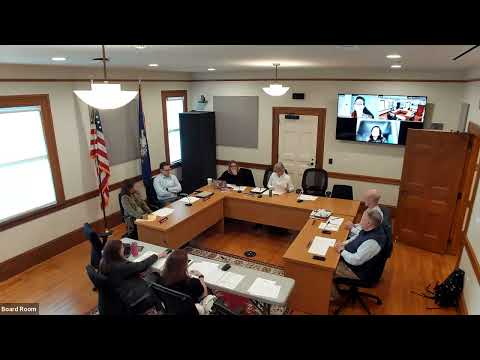
The New Canaan Health & Human Services Commission on Wednesday approved a set of recommendations from its seniors behavioral‑health subcommittee aimed at improving outreach and connections for older residents.
The subcommittee presented findings from the town’s October 2024 Community Health and Well‑Being survey and four follow‑up focus groups that identified several gaps: limited affordable, senior‑friendly housing near downtown; fragmented information channels that leave some seniors unaware of local services; and persistent stigma and access barriers for non‑crisis behavioral‑health supports.
Marcy, director of Human Services, summarized the subcommittee’s view that “programs and resources are plentiful but often scattered across websites and email lists,” and told the commission the pantry and casework caseloads continue to rise. The subcommittee recommended four priorities: centralize and market information about local programs in both print and digital formats; increase awareness of local, non‑crisis mental‑health resources; expand senior and caregiver programming with local partners; and convene area organizations to brainstorm coordinated, low‑burden steps to reach isolated residents.
Commissioners cited several concrete outreach ideas during the discussion. Tom Ferguson, introduced earlier as a long‑serving commissioner, urged focusing on a single collaborative item—such as a refrigerator magnet with key numbers—and using existing touchpoints like Meals on Wheels to distribute printed calendars and resource guides. Commissioners also suggested recruiting a high‑school intern to interview homebound clients and help match them to services.
Members noted recent local investments that align with the recommendations: the Community Foundation awarded $50,000 to Laurel House to support a Lower Fairfield Behavioral Health Network and $15,000 to Family Centers to launch a sandwich‑generation support group in New Canaan. The subcommittee said these grants could be helpful partners for a town‑level outreach effort.
After discussion, a commissioner moved to approve the subcommittee’s recommendations; the motion was seconded and approved by voice vote. The transcript does not record a roll‑call tally.
Next steps discussed included exploring a small Community Foundation grant to hire part‑time marketing help to inventory and format existing resources, convening nonprofit leaders in a neutral forum hosted by Health & Human Services, and targeting September for an awareness push. Commissioners asked members and community partners to return with two or three feasible ideas to pursue and to report back at the next meeting.
The commission’s action directs staff and interested members to continue planning and outreach; it does not create a new municipal program or commit municipal funding in the transcripted motion.