Get Full Government Meeting Transcripts, Videos, & Alerts Forever!
Get email alerts on the Local Revenue topic
No spam. Unsubscribe anytime.
Gilroy council gives staff direction to prepare special public‑safety sales tax proposal for November 2026 ballot
Summary
After a lengthy policy debate about timing, regressivity, competing measures and local needs for police, fire and public‑works staffing, the council signaled support (informal majority) for staff to develop a special public‑safety sales‑tax measure and return with ballot language and ordinance options; formal placement will require a later council vote.
Gilroy city staff will draft ballot language and additional analysis for a potential November 2026 special sales‑tax measure focused on public‑safety and public‑works needs after receiving direction from a majority of council members at the April 6 meeting.
Staff presented a framework that would use a quarter‑percent local sales tax to generate an estimated $4.5 million annually, with suggested priorities including staffing the new Santa Teresa fire station (estimated $1.3 million annually for operations), additional police patrol/support/dispatch capacity (estimated $2.5 million) and an ongoing public‑works allocation for traffic‑safety and maintenance projects (roughly $700,000). Staff described the difference between a general tax (simple majority to pass) and a special tax (two‑thirds required) and noted competing regional and local measures likely on the November ballot.
Council members debated fiscal urgency and political timing for more than an hour. Skeptics cautioned that sales taxes are regressive and that Gilroy residents already face rising tax burdens; others said the community repeatedly cites traffic and safety concerns and should be permitted to decide whether to pay for local services. Council expressed particular caution about the city reaching a 10% total sales‑tax rate when county and other levies are included.
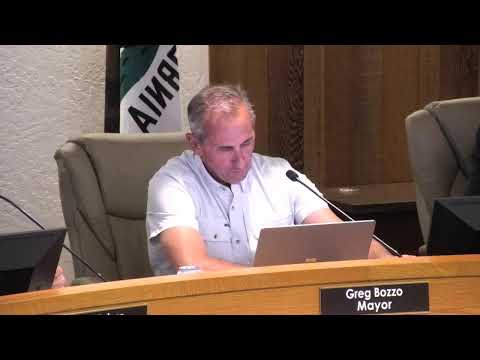
Mayor Greg Bozo and several council members said they would prefer a dedicated (special) public‑safety measure if the council proceeds. A majority of councilors gave staff informal direction (thumbs up) to return in June with refined options and ballot language for a special tax; any formal decision to place a measure on the ballot would require a later ordinance and a minimum five affirmative votes to adopt that ordinance and move forward.
Staff estimated ballot placement costs between $150,000 and $200,000 depending on county allocations and noted that California Department of Tax and Fee Administration setup costs (previously on the order of $170,000 in 2024) would be recouped from future revenues. The council asked staff to return with draft ballot language, expenditure framework, accountability/oversight proposals and updated revenue estimates.