Get Full Government Meeting Transcripts, Videos, & Alerts Forever!
Get email alerts on the Annual Plan Admin Updates topic
No spam. Unsubscribe anytime.
Davenport housing officials present 2026 annual plan and propose new priorities, inspection and eligibility rules
Summary
The Davenport Housing Commission reviewed its 2026 annual plan and proposed administrative updates including a chronically-homelessness preference, a 15-day guest-notification rule, expanded harassment language for background checks, and a no-show inspection policy; the plan is open for public comment through April 13.
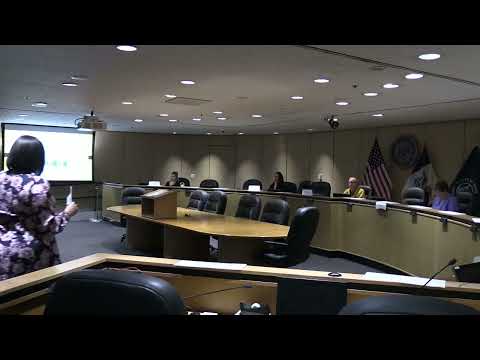
Davenport — At a March meeting of the Davenport Housing Commission, Housing Programs Manager Melia Dunn presented the authority’s 2026 annual plan and a set of administrative-plan revisions that would change eligibility, inspection and occupancy rules for the Housing Choice Voucher program.
Dunn told commissioners the annual plan sets the authority’s program policies and strategic goals for the calendar year required by HUD. "Our annual plan is our comprehensive guide for our policies, programs, operations," she said, adding the authority aims to maintain a utilization rate near 98–100 percent, expand leasing efforts and "serve 100 new households in this calendar year." The plan’s public-comment period remains open through April 13 ahead of a planned vote on April 13; the authority expects to submit the final plan to HUD and make it effective July 1, 2026.
Why it matters
The proposed changes affect who can get priority for a voucher, how long guests may stay without notice, and new enforcement steps for inspections and conduct that staff say will help the authority meet HUD rules and make better use of funding. If approved, the changes would affect participants across Davenport’s Housing Choice Voucher program and the authority’s relationships with landlords and partner agencies.
Key proposals and clarifications
• Chronically homeless preference: Dunn proposed adding a HUD-defined chronic-homelessness preference to the selection method, giving it equivalent points to the Violence Against Women Act preference the authority adopted last year. She said documentation would need to come from third-party community partners — for example, Salvation Army, Family Resources or Humility Homes and Services — and acknowledged that documenting chronic homelessness can be time-consuming.
• Guest and family-absence rules: Under the draft changes, an authorized participant must notify the housing authority if a guest stays more than 15 consecutive days; reasonable-accommodation exceptions would remain available for verified medical or similar needs. The authority also proposes reducing the permissible continuous family absence from six months to 30 calendar days unless a reasonable accommodation is approved.
• Live-in aides and subsidy exceptions: Dunn clarified the authority will evaluate requests for a separate bedroom for a live-in aide or for medical equipment on a case-by-case basis rather than granting an automatic separate bedroom. The authority will refine its definition of qualifying medical equipment and treat accommodation requests individually.
• Harassment and background checks: The administrative updates expand grounds for denying or terminating participation to include patterns of harassment or intimidation of staff. "If we see a repeated pattern of harassment, it could be considered criminal activity," Dunn said. Commissioners asked whether the authority would specify a warning process; Dunn said she would add clearer warning/verbiage to the draft and noted staff already document interactions thoroughly.
• Inspections: Troy, the authority’s inspector, and staff introduced a no-call/no-show inspection policy to address repeated missed or rescheduled inspections. The policy would send a reminder after the first missed inspection and review the participant’s file for termination after a second missed inspection. Staff emphasized the policy aims to meet HUD’s timeliness requirements for inspections and repairs and to avoid prolonged abatement that can leave landlords unpaid and units unavailable for assistance.
• Portability and voucher timelines: Dunn reminded the commission that HUD’s regulations require issuing a voucher within 30 days for portability cases (citing 24 CFR 982.355). The authority will require incoming porting households to acknowledge portability procedures, provide required documentation and attend mandatory orientation; staff said they will not grant additional 30-day extensions for last-minute ports.
Numbers and operational details
Dunn said the authority pulled the wait list in January 2026, adding 10 households that month and leaving 122 households on the wait list after that pull. She reported 19 vouchers are currently open (households searching for housing). In correcting an earlier spreadsheet issue, staff said the recent monthly totals should read 11 new vouchers (9 + 2), seven port-ins, zero port-outs and 20 terminations (some voluntary, some involuntary); commissioners asked for a breakdown of terminations by type.
Public process and next steps
Dunn encouraged commissioners and members of the public to submit written comments: the draft remains open for public comment through April 13, and the commission is scheduled to consider and vote on the plan at its April meeting. Several routine motions for meeting business were passed by voice vote at the start of the meeting, including approval of the February minutes and the February financial and utilization reports.
Ending
The commission closed public business by confirming its next meeting date and adjourning by voice vote. Staff said they will incorporate commissioner feedback and publish the revised draft before the April vote.